UCL biologist wins Balzan Prize 2026 for molecular evolution
The 2026 Balzan Prizes have been unveiled in Milan, recognising global achievements in molecular evolution, digital sociology, green polymers, and peace.
22 September 2026 · 3 min read
Ziheng Yang was recognised with Rasmus Nielsen (University of California, Berkeley) for their pioneering and complementary contributions to molecular evolution, combining statistical theory, computational methods, and genomic analysis to reveal how natural selection shapes genes and populations, and for developing widely used tools that have transformed the study of evolutionary adaptation.
The winners of the Balzan Prizes were announced on Monday 7th September by the President of the International Balzan Foundation Prize, Maria Cristina Messa, and the Chair of the Balzan General Prize Committee, Marta Cartabia, during a virtual press conference in Milan.
Every year, the International Balzan Foundation awards four prizes to scholars, artists, and scientists who have distinguished themselves on an international level, selected by the General Prize Committee. The subjects are chosen from two general categories: literature, moral sciences, and the arts; and physical, mathematical, and natural sciences, and medicine. Unlike the Nobel Prize, the four specific subject areas change every year: this approach allows new or emerging lines of research to be recognised.
This year’s subjects were: The Social Science of Digital Technology, Jewish Studies, Molecular Evolution: Decoding Patterns of Genomic Change, and Biodegradable Polymers from Renewable Sources.
The value of each Balzan Prize is 750,000 Swiss Francs (approx. 695,000 GBP), half of which must be allocated to research projects carried out by young researchers.
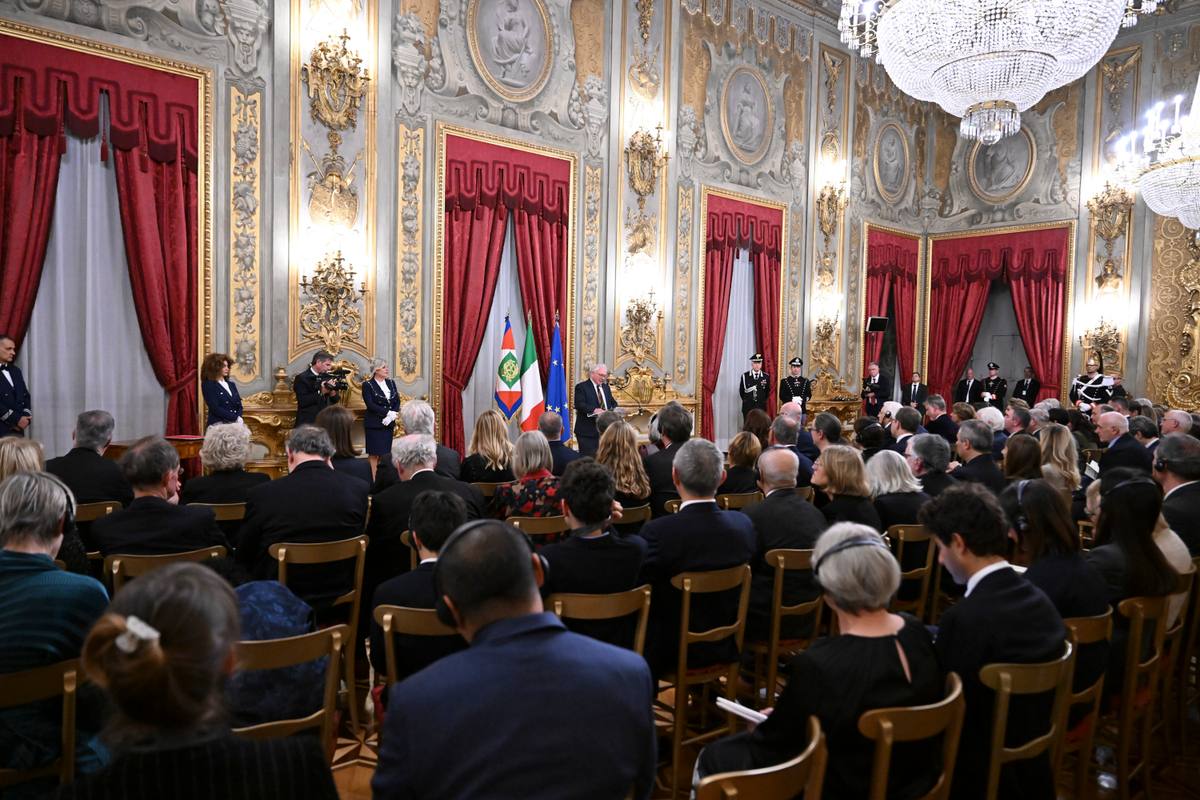
The awards ceremony for the 2026 Balzan Prizes will be held in Rome on 19 November 2026 in the presence of the President of Italy, Sergio Mattarella.
For the latest developments, visit the Balzan Foundation website or follow the International Balzan Foundation on social media.
The Motivations for the 2026 Balzan Prizes
To Elena Esposito for The Social Science of Digital Technology:
For her ground-breaking theoretical contribution to the social science of digital technology, and in particular for her concept of artificial communication, which reframes the question of artificial intelligence by showing that algorithms can participate in social exchange in the absence of understanding. For providing a rigorous and innovative framework that could transform social science engagement with artificial intelligence across every domain in which algorithmic systems are becoming active participants. For her sustained programme of empirical research applying these insights to algorithmic prediction in finance, medicine, and public policy.
To Rasmus Nielsen and Ziheng Yang for Molecular Evolution: Decoding Patterns of Genomic Change:
For their pioneering and complementary contributions to molecular evolution, combining statistical theory, computational methods, and genomic analysis to reveal how natural selection shapes genes and populations, and for developing widely used tools that have transformed the study of evolutionary adaptation.
To David Nirenberg for Jewish Studies:
For his groundbreaking scholarship and contributions on Judaism, anti-Judaism, and the dynamics of the relationship between Jews, Christians, and Muslims; for his meticulous research, theoretical insights on the fundamental interdependence of violence and tolerance, rigorous historical analyses, and command of a wide range of sources in multiple languages and spanning multiple disciplines; and for profoundly advancing our understanding of not only ancient, but also contemporary questions.
To Geoffrey W. Coates and Marc A. Hillmyer for Biodegradable Polymers from Renewable Sources:
For their pioneering and collaborative development of sustainable polymers, combining molecular design and catalysis to transform renewable feedstocks and recovered carbon dioxide into high-performance, degradable and recyclable materials, and for advancing these discoveries from fundamental science to industrial materials and technologies.
Prize for Humanity, Peace and Fraternity Among Peoples
To Emergency Response Rooms for Humanity, Peace, and Fraternity among Peoples:
For the extraordinary role it has played in providing on-the-ground assistance, solidarity and hope to communities affected by the civil war in Sudan. Through an extensive network of Emergency Response Rooms (ERRs) and Local Coordination Councils (LCCs) – born out of civic engagement and grassroots participation – the movement has been able to fill the void left by the collapse of institutions and the difficulties in accessing international aid. In particular, the Balzan Prize money will be used to strengthen activities related to mental health care, which are of the utmost importance in a context marked by violence, displacement and a severe humanitarian crisis.
Contributor at The London News