Stargazing holidays soar 50% as travel expert reveals hotspot locations
Google Trends reveals Yorkshire Dales is attracting the most search interest, while new light-pollution data puts Exmoor at the top for darker skies.
16 October 2026 · 5 min read
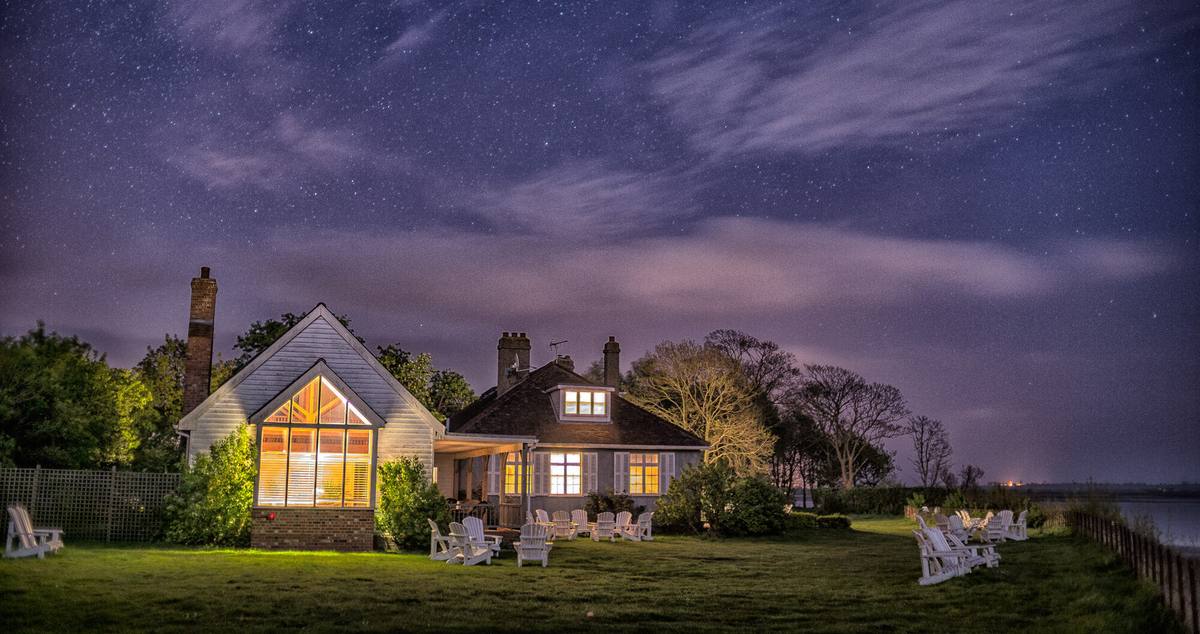
We’re searching for ‘stargazing holidays’ in the UK 50% more than we were 5 years ago, reaching breakout on Google Trends exactly at the time of the solar eclipse in August 2026, generating an increase of over 5,000% searches.
Stargazing holidays are truly lighting up. ‘Astrotourism’ searches more generally experienced a breakout on Google Trends compared to the preceding five years. It’s official, we’re loving star-spotting, and it coincides with our need to escape our chaotic, overwhelming lives and digital fatigue, and put it into perspective with something infinitely more like the skies.
The increase comes as the National Parks Dark Skies Festival returns this October, putting Britain's night skies firmly on the travel calendar. We’re huddling together for warmth in the midst of autumn to celebrate our darker landscapes through stargazing experiences and everything that comes with it like astronomy knowledge, gloomy but bright walks, wildlife-spotting and photography.
The Rise of Astrotourism and Digital Detox Escapes
kate & tom’s resident travel expert, Andy Brooker, has analysed the latest search data alongside light-pollution information to reveal where’s on the UK hotlist for travellers’ next stargazing escape.
Andy explains why stargazing holidays especially appeal in 2026, and reveals the unsung heroes of UK stargazing that we can’t gatekeep forever: “Stargazing especially appeals to us in 2026 as we’re—to put it bluntly—totally over looking at our phones. We’re dopamine-chasing by doomscrolling, selecting what we look at and curating our own controlled algorithms and often not finding the time to actually connect with the world around us in person. Looking up at the sky and truly observing something so much bigger than us can feel very freeing, and make our mundane problems feel much smaller.
“The solar eclipse has clearly reignited that curiosity for an escape and something we can see but feels mysterious and other-worldly, but the search data suggests this isn’t just a one-off astronomical moment but actually a movement, where people are actively looking for holidays built around the night sky.
“What’s interesting is that the places people are searching for most aren’t necessarily the places with the lowest light pollution. Yorkshire Dales is leading the search interest, while Exmoor comes out top when we look at darker skies. That gives travellers plenty of choice, from well-known National Parks to quieter spots like Cranborne Chase and Bodmin Moor.
“For those astrotourism-curious travellers, I say don’t overlook the ‘unsung heroes’, either. Prioritise somewhere with minimal light pollution; some of the quieter dark-sky destinations can offer just as memorable a night under the stars without the crowds.”
The UK's Top Five Dark-Sky Destinations to Watch
Exmoor National Park - the no.1 dark-sky destination to watch Exmoor is listed by LightPollution.org as the UK's leading location for low light pollution, while Google Trends puts it third in search-interest across the UK at 18%. It’s also particularly timely for travellers, with the Exmoor Dark Skies Festival running from 16th October to 1st November 2026. The 10th festival includes astronomy sessions, planetarium experiences, e-bike night rides, bioluminescence walks, UV rock pooling and moonlit pool dips - there’s something for all ages. Andy Brooker explains why Exmoor is one of the perfect spots to look up at the sky: “Not only is it the area with the lowest light pollution, Exmoor is a fantastic area to explore by day, too, with dramatic coastal cliffs, sweeping open moorland, and quiet ancient woodlands. The darkness can be part of your trip rather than a single stargazing event, there’s plenty to see and do by day and night!”
Yorkshire Dales - Britain's most searched dark-sky escape Ey up, Yorkshire’s looking to be the favourite for stargazing Brits this autumn/winter. The Yorkshire Dales takes the top spot in the Google Trends comparison at 33%, while also among the locations with low levels of light pollution. The National Park's Dark Skies Fringe Festival takes place from 23 October to 1 November, with stargazing, night photography and dark-sky-friendly accommodation. Andy offers his top tip for stargazing in the Dales, especially if you’re new to it: “If you're new to stargazing, Yorkshire Dales is a really accessible place to start. I'd combine a rural stay with one organised event, so you have someone on hand to explain what you're looking at rather than simply turning up and hoping for the right conditions.”
Northumberland is for the serious stargazers Northumberland was revealed by LightPollution.org as one of the UK's lowest-light-pollution destinations, particularly around the remote East Kielder Moors, and hosts the largest Gold Tier International Dark Sky Park in the country - covering 572 square miles of protected night skies with very little light pollution. Yet people appear to not be considering Northumberland in their Google searches, so we’re classing it as an ‘unsung hero’ of stargazing and it’s firmly third on our list.
The North York Moors The North York Moors account for 13% of relative search interest in the Google Trends comparison, as well as being one of the UK's low-light-pollution destinations. It’s going to be popular for the dark sky season for a reason, offering people the opportunity to build the whole trip around being outdoors, rather than a single astronomy experience. Its Dark Skies Fringe Festival runs from 23 October to 1 November 2026, with stargazing, night navigation, photography and other after-dark experiences. This year's programme includes guided stargazing at Danby Lodge, night photography and walks that use the stars for navigation - a truly immersive experience, and great especially if you have children.
Eryri Eryri National Park is one of the top dark-sky destinations in the world because its rugged, sparsely populated landscape keeps light pollution extremely low. Eryri is a brilliant example of why the rise of stargazing holidays is about more than astronomy. You can have a whole escape that combines dramatic mountain scenery by day with genuinely impressive dark skies after sunset. It’s one of the most searched-for destinations in our data, accounting for 24% of the relative search interest in the comparison. For travellers who want their stargazing break to feel like a proper adventure, rather than simply an evening spent looking through a telescope, Eryri ticks a lot of boxes. The mountains make the experience feel particularly immersive once the sun goes down.
Contributor at The London News