Flying from Heathrow this half-term? GP warns against common ear-popping trick
With half-term approaching, families across London and Sussex preparing to jet off from Gatwick or Heathrow are being advised to take care when trying to relieve painful, blocked ears during flights.
22 October 2026 · 3 min read
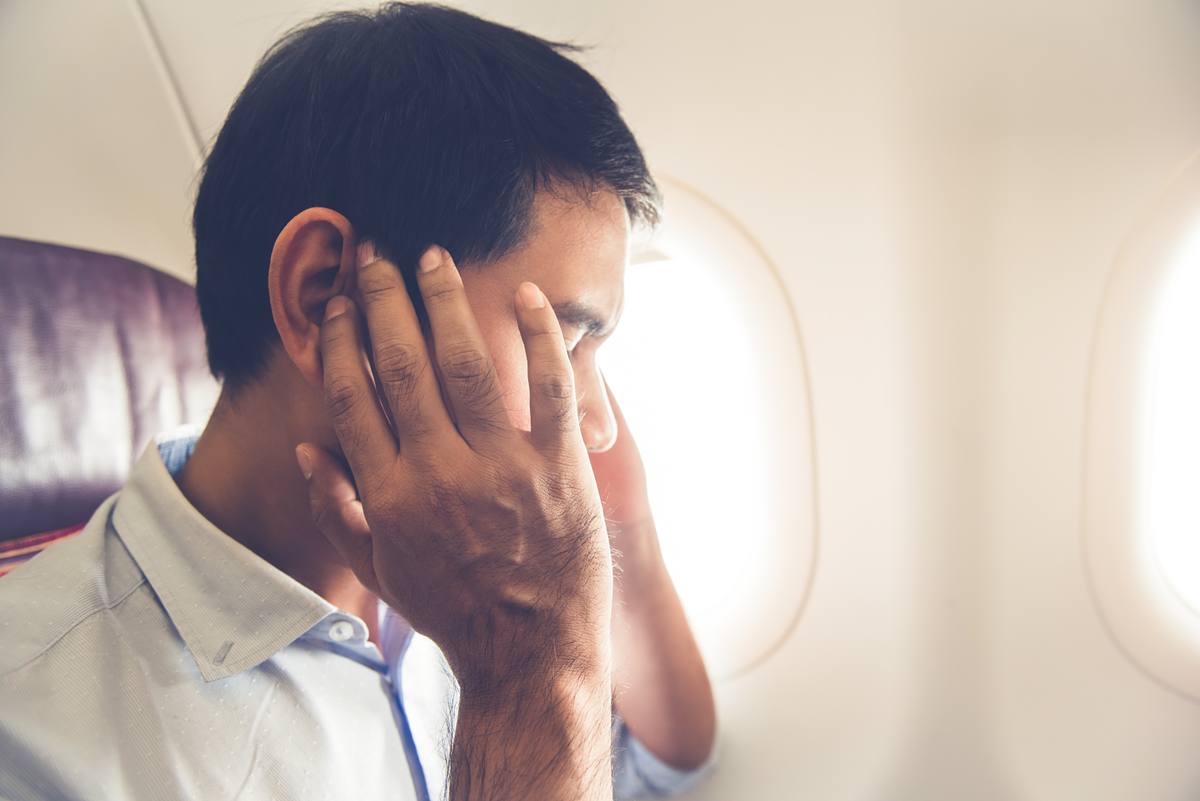
Pinching your nose, closing your mouth and blowing to make your ears pop is a familiar trick for many travellers. But NHS GP Dr Asimah Hanif, working with travel insurance provider Staysure, warns that forcing it, particularly when suffering from a cold or congestion, can create excessive pressure inside the ear.
Fortunately, there is a gentler alternative that travellers can try, which uses swallowing rather than blowing to help equalise pressure.
Why your ears pop on planes
The discomfort comes from pressure changes as a plane climbs or descends. A small passage called the Eustachian tube connects your middle ear to the back of your nose and throat. It normally opens when you swallow or yawn, letting pressure equalise on both sides of your eardrum.
If that tube is blocked, pressure builds up instead, leaving your ears feeling full, muffled or painful.
The trick most people use isn't always the right one
That pinch-nose-and-blow method is known medically as the Valsalva manoeuvre, and it’s the go-to for most flyers. However, it’s easy to do more forcefully than is safe, especially when you’re congested and it doesn’t work first time. NHS GP Dr Asimah Hanif, working with Staysure, says that’s where problems can start.
“If you have a blocked nose, a cold, sinus infection or another condition affecting the Eustachian tube, forcefully blowing against a closed nose can create excessive pressure inside the ear,” she says.
“Done gently, it’s a safe and effective technique, but there’s a risk that comes with forcing it.”
The problems that can arise from this sort of excessive pressure are documented and real. In one published case, a 45-year-old man developed sudden hearing loss, vertigo and ringing in one ear after blowing his nose forcefully. Doctors found a tear in the membrane separating his middle and inner ear, and had to repair it surgically.
It's a rare complication, and this particular case wasn't linked to flying, but it shows the pressure involved in forcing a blocked passage isn’t trivial.
The trick most people haven’t heard of
If you’re congested, there’s another option worth trying. Dr Asimah suggests the Toynbee manoeuvre: pinching your nose while swallowing, instead of blowing.
“It uses your body's normal swallowing muscles to help equalise pressure, rather than creating additional force," she says. "For many people, particularly those with congestion, it's a gentler option worth trying."
If it doesn't work the first time, try again. Cabin pressure changes during descent, affecting the pressure in the middle ear.
Dr Asimah also recommends a few simple habits to help prevent discomfort in the first place: "Swallow frequently, and chew gum or suck a sweet during take-off and landing. Yawning regularly helps too, and it's good to stay hydrated, since a dry throat makes swallowing less comfortable. For babies and toddlers, a bottle, dummy or drink on descent often does the job.”
Should a nasty cold or sinus infection stop you from flying?
Flying with a heavy cold, sinus infection or ear infection isn't usually dangerous, but it can be far more uncomfortable, and increase the risk of pressure-related problems in your ears or sinuses.
Dr Asimah says if you're unsure whether it's safe to fly, check with a doctor first.
She adds: “If you're travelling with a medical condition, it's worth choosing insurance that covers pre-existing conditions properly. And if you're flying with something like a bad cold, sinus infection or ear infection, check with your insurer first - flying against medical advice and having something go wrong can invalidate your cover, even if the condition itself wasn't declared as a pre-existing one.”
Contributor at The London News