The Next AI Divide Will Not Be About Access — It Will Be About Understanding
As artificial intelligence tools become widespread, the ability to question, verify, and critically evaluate AI outputs is becoming essential.
8 October 2026 · 4 min read
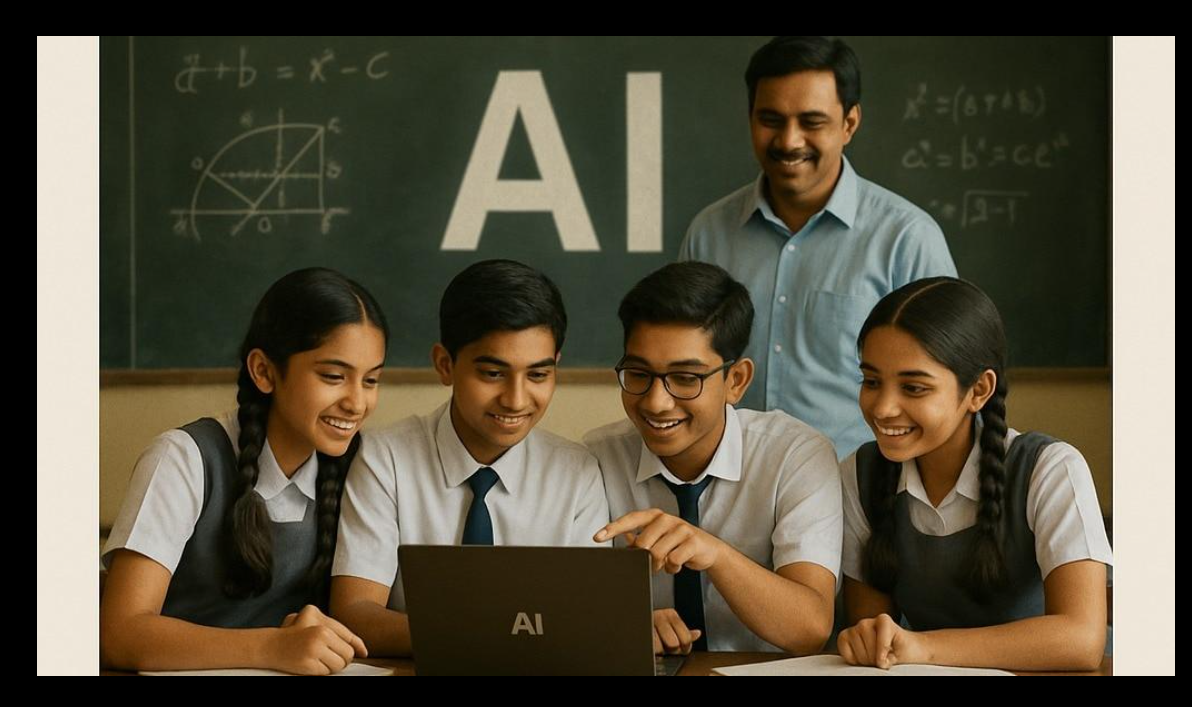
Artificial intelligence is rapidly becoming part of everyday life. People use AI to write emails, translate languages, search for information, create images, analyse data and learn new subjects. What once appeared to be an advanced technology available mainly to researchers and large companies is increasingly becoming accessible to ordinary users.
But as access to AI becomes easier, another problem is beginning to emerge: knowing how to use AI responsibly may become more important than simply having access to it.
The next major digital divide may therefore not be between people who have AI and people who do not. It may be between people who understand how to question, verify and use AI effectively and those who simply accept whatever an AI system produces.
From digital literacy to AI literacy
Previous generations of digital education focused on teaching people how to operate computers, use software, access the internet and communicate online.
AI introduces a different challenge.
A person can know how to open an AI application and still have very little understanding of how to use it well.
AI systems can produce convincing answers that may contain errors, incomplete information or misleading assumptions. They can also generate text, images and other material that appear authentic even when they are not.
This means that future digital education cannot stop at teaching people how to use technology. It must also teach them how to question technology.
Students need to learn how to formulate useful questions, evaluate answers, compare information with reliable sources and recognise when an AI system may be wrong.
That is not simply a technology skill. It is a critical-thinking skill.
The classroom is becoming a testing ground
Education may be one of the first areas where this change becomes especially visible.
A student can now ask an AI system to explain a difficult scientific concept, create revision questions, help organise a study plan or provide feedback on writing.
Used properly, such tools can make learning more personalised and accessible.
But there is an important difference between using AI to learn and using AI to avoid learning.
If a student asks an AI system to complete an assignment and submits the result without understanding it, technology has replaced learning.
If the same student asks the system to explain a difficult concept, challenges its answer, checks external sources and then develops their own response, AI has become a learning assistant.
That distinction may become one of the most important questions facing education systems.
Why this matters beyond schools
The issue extends far beyond students.
Workers, small-business owners, teachers, researchers and ordinary citizens are increasingly encountering AI-generated information.
A small business owner may use AI to create marketing material. A teacher may use it to prepare learning resources. A researcher may use it to organise information. An employee may use it to draft professional communication.
In each case, the ability to evaluate the output becomes crucial.
The most valuable skill may therefore not be the ability to produce an impressive prompt.
It may be the ability to look at the answer and ask:
“How do I know this is correct?”
India has an opportunity
For countries such as India, the expansion of AI presents both an opportunity and a challenge.
India already has a large technology ecosystem and a young population increasingly exposed to digital services. But access to technology does not automatically produce technological literacy.
AI education therefore needs to become more accessible and less intimidating.
People do not necessarily need to begin with complicated mathematics, programming or machine-learning theory.
They can begin with practical questions:
How can AI help me study?
How can I use it to improve my work?
How can I check whether its answer is reliable?
How can I protect my personal information?
How should I acknowledge AI assistance?
What should I never blindly trust an AI system to decide for me?
These questions can form the foundation of a much broader approach to AI literacy.
The human skill that becomes more important
There is a temptation to describe AI as a replacement for human abilities.
A more useful way to understand the technology may be to see it as something that changes which human abilities matter most.
When machines become better at producing information, humans may need to become better at judging information.
When machines become better at generating content, humans may need to become better at deciding what is worth creating.
And when machines become better at answering questions, humans may need to become better at asking meaningful questions.
The future of AI education should therefore not be about producing people who blindly depend on AI.
It should produce people who can work with AI without surrendering their own judgement.
That distinction could determine whether the next generation experiences AI as a tool for greater opportunity—or simply as another source of information they do not know how to evaluate.
The AI revolution may ultimately be measured not by how many people can access artificial intelligence, but by how many people understand what to do with it.
Contributor at The London News