The New Frontline of AI: How Computer Vision is Saving Lives in Heavy Industry
Artificial intelligence is becoming one of construction's most effective safety tools.
11 November 2026 · 5 min read
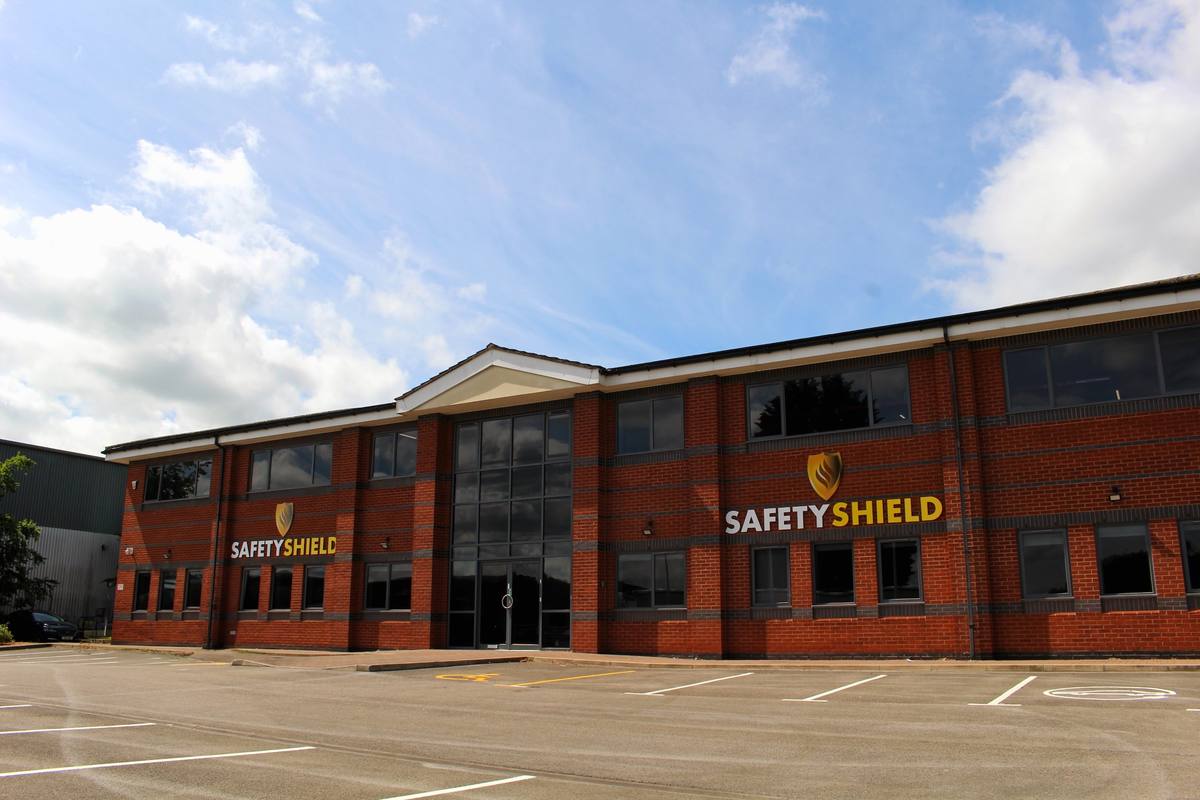
London, 06 November 2026 – Artificial intelligence is becoming one of construction's most effective safety tools. Safety Shield Global's AI-powered Human Form Recognition technology detects people working around heavy machinery with 99.6% accuracy and has helped reduce incidents by an average of 70% on sites where it has been deployed, highlighting the growing role of computer vision in protecting workers.
The next major frontier for artificial intelligence may not be behind a computer screen. It may be on a construction site, in a quarry or beside a moving excavator.
As AI rapidly moves into the physical world, technologies such as computer vision and Edge AI are beginning to give machines something they have never had before: the ability to recognise and respond to what is happening around them in real time.
For Safety Shield Global, that means using AI to address one of the most persistent risks in heavy industry: people and mobile machinery operating in the same environment.
Its Human Form Recognition technology uses computer vision to detect people around heavy plant and provide operators with immediate visual and audible warnings. The technology has achieved a reported 99.6% detection accuracy and has helped reduce incidents by an average of 70% on sites where it has been deployed.
The development represents a significant shift in how AI is being applied. Rather than using artificial intelligence to generate content, analyse documents or automate office-based tasks, Safety Shield is deploying AI in environments where decisions have to be made in fractions of a second and where the consequences of getting them wrong can be serious.
When AI has to work in the real world
Construction and heavy industrial environments present some of the most demanding conditions for AI technology. Machinery moves constantly, visibility can change, weather conditions can be unpredictable and every working environment is different.
For AI to be useful in these settings, it cannot simply identify an object. It needs to operate reliably in real time and provide information quickly enough for an operator to respond.
This is where Edge AI becomes increasingly important.
Rather than relying entirely on cloud computing, Safety Shield's technology processes data locally on the machine. This reduces latency and allows safety systems to continue operating where connectivity is limited or unavailable.
According to Jonathan Guest, Founder and CEO of Safety Shield Global, the development of AI is creating new possibilities for protecting workers.
"Construction has always presented one of the most challenging environments for artificial intelligence. Machinery is constantly moving, weather conditions change, visibility varies and every site is different. If AI can perform reliably in those conditions, it demonstrates just how far the technology has come.
"The opportunity isn't to replace people. It's to give operators greater awareness and help prevent incidents before they happen."
Fifteen years of turning an idea into industrial AI
Safety Shield's technology has been more than 15 years in development.
Originally created for construction, its Human Form Recognition technology has evolved alongside advances in machine learning, computer vision, camera technology and Edge AI. The technology is now being used across sectors including quarrying, waste and recycling, forestry, logistics and agriculture.
The company's journey began with a deeply personal motivation.
Safety Shield founder and CEO Jonathan Guest began developing the technology after a close friend was killed in a collision involving an excavator on a construction site. What began as a mission to prevent other families from experiencing the same loss has developed into a global technology business focused on reducing the risk created when people and heavy machinery share the same working environment.
That journey has also tracked the rapid evolution of artificial intelligence.
Simon Bailey, Head of Research & Development at Safety Shield Global, says advances in AI have fundamentally changed what is possible in industrial environments.
"Over the past decade, AI has evolved from experimental technology into practical, real-world systems capable of operating in demanding industrial environments.
"Advances in computer vision, machine learning and edge processing have significantly improved detection accuracy while reducing false positives. We're continually evaluating emerging AI models and hardware to ensure our technology evolves alongside the wider AI landscape."
From aftermarket technology to intelligent machines
AI is also beginning to change the machines themselves.
Safety Shield's recent collaboration with Komatsu to introduce a factory-fit Human Detection System demonstrates how intelligent safety technology is increasingly being integrated directly into construction equipment.
Rather than treating safety technology as an additional layer installed after a machine reaches a site, factory integration allows intelligent detection systems to become part of the machine from the outset.
The shift reflects a wider movement towards connected and increasingly intelligent industrial equipment, where machines can detect their surroundings, share information and support operators in making safer decisions.
The next step: from seeing risk to understanding it
Safety Shield is also developing its use of AI beyond collision detection.
The company's Nexus technology is currently focused on AI-powered risk categorisation and is being developed further as part of Safety Shield's wider approach to understanding risk across industrial environments.
For Simon Bailey, the longer-term opportunity lies in moving from AI that simply detects what is happening to systems that can understand why it matters.
"The next phase will be AI systems that understand context, predict potential risks and communicate with other machines across connected job sites. AI will become an increasingly intelligent safety assistant, helping operators make better decisions in real time."
This could see AI play a growing role in connected safety ecosystems, where information from cameras, machines and other sensors is combined to give operators a more complete picture of their surroundings.
AI is another layer of protection
Despite the pace of development, Safety Shield does not view AI as a replacement for people.
Technology can identify potential hazards and provide additional information, but effective workplace safety still depends on training, human judgement, procedures and a strong safety culture.
"Technology is becoming an increasingly powerful tool," added Simon Bailey. "But achieving zero harm will always require a combination of innovation, operator training and a strong safety culture. AI is another layer of protection, not a substitute for good practice."
As artificial intelligence increasingly moves beyond the digital world and into factories, construction sites, mines and other industrial environments, the question is no longer simply what AI can generate.
It is what AI can see, understand and help people prevent before it becomes an incident.
About Safety Shield Global
Safety Shield Global is a pioneer and market leader in Edge AI safety technology for industrial environments. Its Human Form Recognition software is designed to prevent collisions between people and heavy machinery by providing operators with real-time visual and audible alerts.
The company's AI-powered safety solutions are deployed across construction, quarrying, forestry, utilities, logistics, agriculture and waste management industries worldwide. In 2024, Safety Shield Global received the King's Award for Enterprise: Innovation for its Human Form Recognition technology.
For more information, visit safetyshieldglobal.com.
Contributor at The London News