Heavy Rain Won’t Solve Construction’s Water Problem: Design Resilience Into New Builds
Hear from Danny Locke, Operations Director at ByWater Services, to find out how housing developments can better plan water use.
22 October 2026 · 4 min read
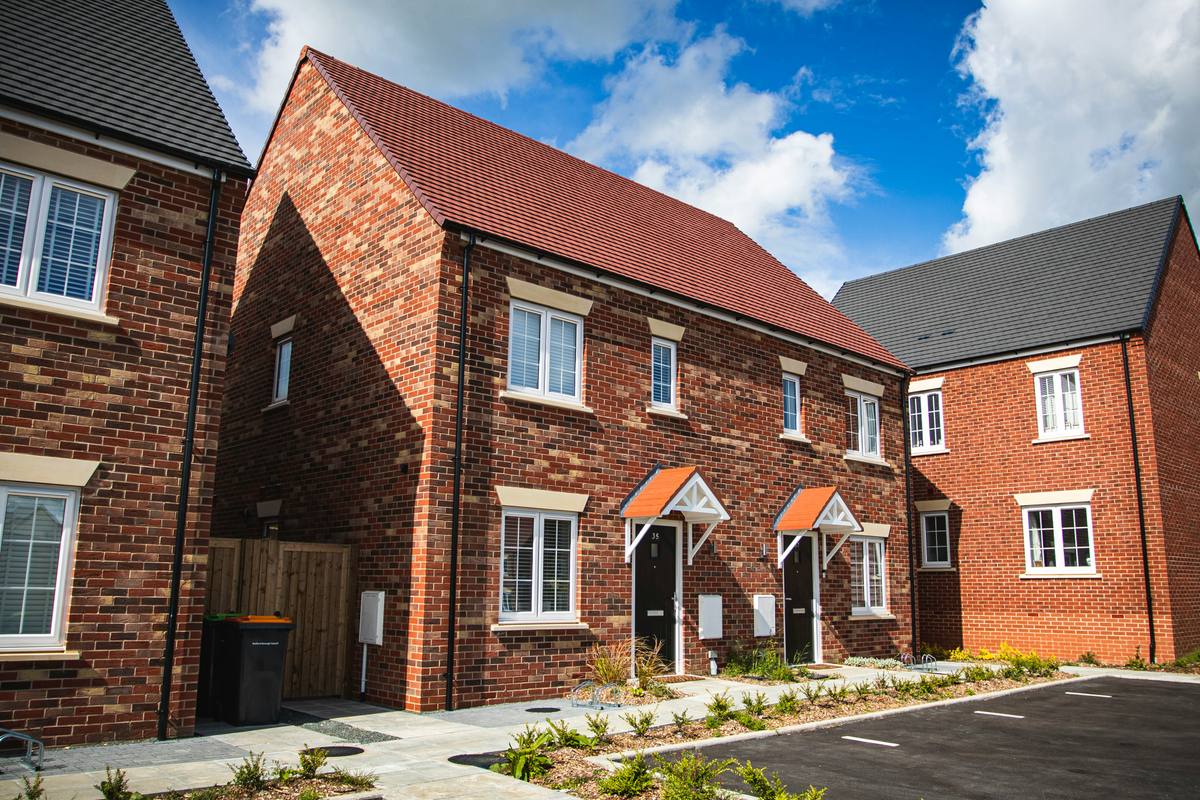
After months of dry weather across the UK, heavy rain can often feel exactly what homes and businesses across the country need. Sudden downpours, however, don’t help to fix water problems caused by a lack of rain in the long term.
Environment Agency data for the week ending 8 September 2026 showed reservoir storage across England at 56.9%, almost 20% below the long-term average for the time of year. Twelve reservoirs or reservoir groups were less than half full, while 10 Environment Agency areas remained in drought status.
Water resilience, especially in the UK, is often considered in terms of “what happens when there is too much water?”, with flooding, surface runoff, and drainage all considered, rather than how developments can manage water across their entire lifetime.
Water is becoming a development constraint
For the construction industry, this is a very important distinction. As our climate patterns become less predictable, the new reality is that developments need to be designed for both extremes: periods of intense rainfall and others of water scarcity.
Danny Locke, Operations Director at ByWater Services, said:
‘’The mistake is treating water as something to deal with once a site is operational. By the time a development is built, some of the biggest opportunities to capture, reuse, store and manage water have already been designed in, or designed out’’
This means looking beyond reliance on mains supply or simply finding the quickest way to move excess water away from a site.
At design stage, developers can begin asking more practical questions: how much water will the development require? Where could non-potable water be used? Can rainfall be captured and reused? Could wash water or process water be treated and recirculated? Is there sufficient space for storage and treatment infrastructure? And how will those systems be accessed and maintained once the site is operational?
These decisions are significantly easier to integrate during design than once a development has already been built.
Water resilience should therefore sit alongside considerations such as energy efficiency, carbon reduction and biodiversity. Developments are expected to operate for decades, so the way they consume, store and discharge water needs the same long-term thinking.
Danny added:
“Water resilience does not necessarily mean adding more infrastructure. It starts with understanding how water will move through the site, where potable water is genuinely needed and where opportunities exist to capture or reuse water instead.”
From managing water to designing for the whole cycle
Historically, much of the focus around water in developments has been on moving excess rainfall away from buildings as efficiently as possible.
That remains important, but resilience requires a broader approach.
Instead of treating rainfall or wastewater purely as something to remove, developments can consider where water can be captured, stored, treated and reused safely. This can reduce demand on mains potable water while making better use of water already available on site.
Rainwater harvesting, on-site storage, sustainable drainage and water reclamation can all form part of that approach. ByWater designs bespoke rainwater harvesting systems to collect, filter and store water for uses including irrigation, wash-down, process applications and other non-potable requirements.
The value, however, is not simply in installing individual technologies. It comes from understanding how those measures work together as part of the site's wider water cycle.
Lessons from existing water resilience projects
ByWater has already seen this approach work in practice. At a manufacturing facility in Qatar, the company designed a water reclamation system to reduce reliance on freshwater and improve how wastewater from equipment cleaning was managed.
The system achieved 97% water recycling efficiency, showing how much can be gained when treatment and reuse are considered as part of the wider operation.
The context is different from the UK, but the principle is the same: water resilience works best when it is designed into the site from the start.
Getting ahead of water risk
Water resilience is not only an environmental issue. It can also affect operating costs, infrastructure requirements and how easily a site can adapt in the future.
Reducing mains water demand, reusing water where appropriate and planning storage or treatment infrastructure early can all reduce pressure on a development later.
Not every development will need the same solution. The key is understanding the site's water risks early enough for the design to respond.
What needs to change?
There are three main priorities:
Consider water earlier. It should be part of the design process, not something addressed once the site is operational.
Plan for both extremes. Developments need to cope with heavy rainfall as well as periods of water scarcity.
Focus on the outcome. The aim should be to reduce unnecessary mains water use and make better use of water already available on site.
Heavy rainfall is a reminder, not a solution
Heavy rain does not mean longer-term water pressures have disappeared.
For the construction industry, water increasingly needs to be treated in the same way as energy use or carbon reduction: something that is planned for from the beginning.
Danny concluded:
“The most resilient developments will be the ones that understand their water needs from the start and design around them.”
Heavy rain may provide short-term relief, but long-term resilience needs to be built in.
Contributor at The London News