Knife crime is now a workplace safety issue as calls grow for bleed kits across London
Veteran-led academy Black Onyx says London's employers must move from reaction to readiness.
17 November 2026 · 3 min read
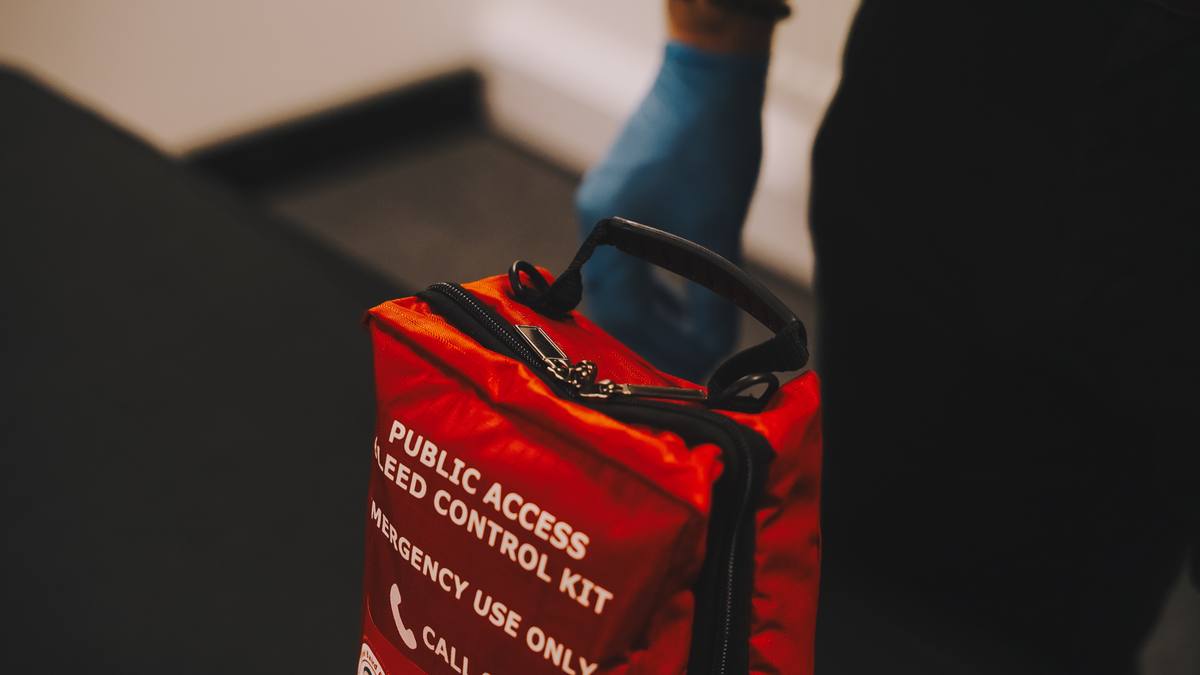
Knife crime is now a workplace safety issue, veterans warn, as calls grow for bleed kits to sit beside defibrillators.
With weapon incidents against shop workers averaging 36 a day, a veteran-led academy says London's employers must move from reaction to readiness.
Businesses across London and the rest of the UK are leaving staff and customers unprepared for violence on their premises, according to a veteran-led training organisation calling for catastrophic bleed control kits to become as standard as the defibrillator on the wall.
Black Onyx Academy, which delivers the accredited S.A.L.T. (Save.A.Life.Today) course, says knife crime can no longer be treated as a matter for the police and youth services alone. It is now, the academy argues, a question of workplace safety.
The figures behind the warning are stark. The British Retail Consortium's 2026 Crime Report recorded more than 1,600 incidents of violence and abuse against retail workers every day, around 590,000 over the year. Some 13,000 of those involved a weapon: roughly 36 a day. Across England and Wales, police recorded 48,774 offences involving a knife or sharp instrument in the year to March 2026.
For a capital whose economy runs on shops, transport networks, bars, restaurants and offices, the implications are hard to ignore. These are exactly the settings where, the academy says, serious incidents increasingly play out, and where frontline staff are least likely to have been trained to respond.
"Most employers have a fire evacuation plan and a defibrillator on the wall, but almost none have a plan for what happens if violence escalates on their premises," said Stefan Northfield, Strategic Lead at Black Onyx Academy.
"Retailers, transport operators, hospitality venues and offices are increasingly the backdrop for serious incidents, yet staff are rarely trained to recognise risk, de-escalate a situation or stop catastrophic bleeding in the minutes before paramedics arrive. Those minutes decide whether someone lives or dies."
He added: "Preparedness is now part of an employer's duty of care, and it's far cheaper than the cost of getting it wrong."
Three questions for every employer
The academy believes the national conversation has centred almost entirely on policing and young people, leaving a basic question unanswere - 'are British workplaces actually prepared?'
It is urging business owners and managers to start with three checks:
Are staff trained in conflict de-escalation?
Are catastrophic bleed control kits on site, and does anyone know how to use them?
Is there a clear response plan if an incident occurs?
Martyn's Law on the horizon
The timing matters. Martyn's Law, formally the Terrorism (Protection of Premises) Act, is expected to come into force in spring 2027 and will require qualifying venues and events to have public protection procedures in place. With London home to a dense concentration of the venues likely to fall within scope, many operators are already reviewing how they would respond to a serious incident.
From the military to the shop floor
Black Onyx Academy's training draws on military experience in conflict de-escalation, risk assessment and emergency response, translated into a practical, accredited course for businesses, transport operators, schools and community organisations.
The organisation has also recently launched what it describes as the UK's first veteran-led Mobile Knife Amnesty Van, which tours communities collecting surrendered weapons and opening direct conversations with the public about knife crime.
The academy's message to employers is that, as with fire and cardiac arrest, the outcome of a violent incident is often decided before the emergency services arrive, by whoever happens to be in the room and whether they know what to do.
Contributor at The London News