From Good Teens to Creepy Men: The Making of Goblin as it debuts at the Park Theatre
Creator and performer Derek Mitchell explores the inspiration behind Goblin, reflecting on queer identity, 2000s pop culture, growing up, manipulation and the journey of bringing the show to the stage.
23 November 2026 · 4 min read
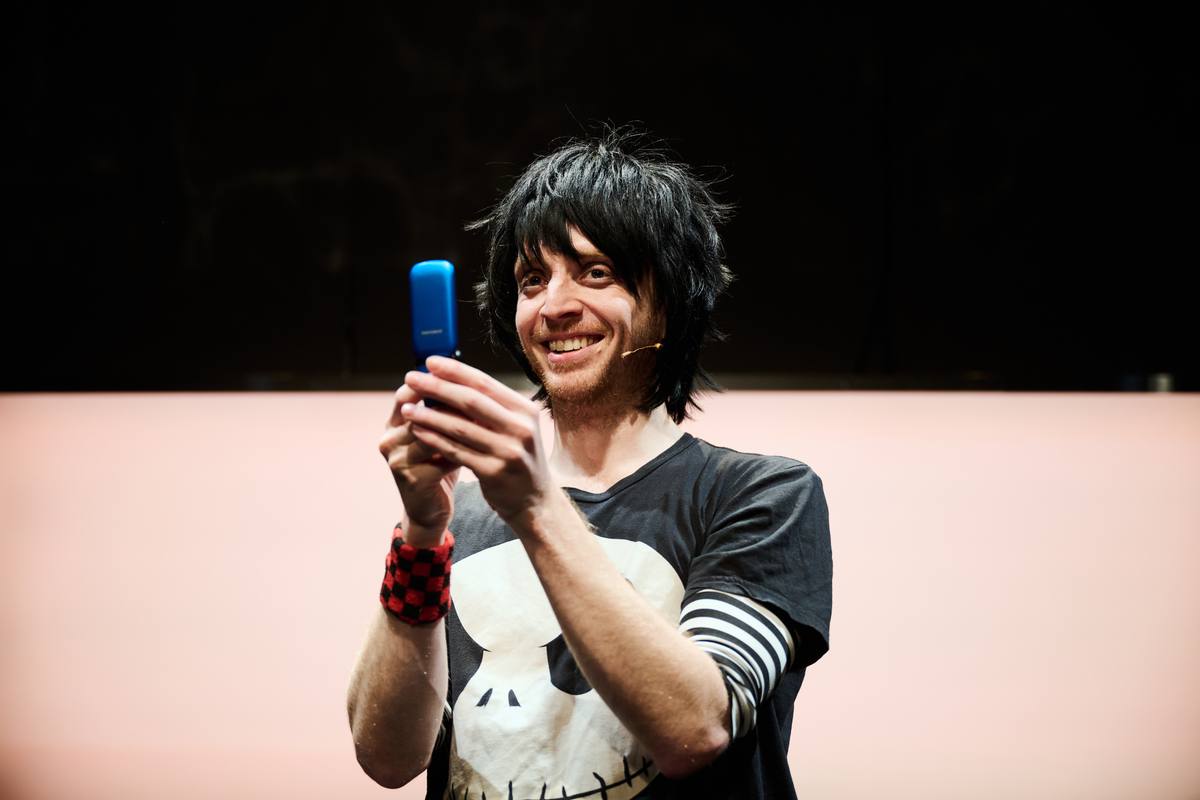
It’s 2008. I’m 16 and have crawled onto the roof of my childhood home in Illinois. I’m drinking an ancient Smirnoff Ice with a rusty bottle cap, stolen from the storeroom of an apartment complex a friend works at. I’m staring at the Midwestern sky listening to My Chemical Romance and dreaming about becoming a grown-up.
In hindsight, of course, I understand how much I didn’t know.
What the HECK is Goblin about?
Goblin is about the things that shape us as we grow up. Some of them shape us irrevocably, and some we’re in control of as we transform. It’s a show about a teenage boy who is deeply good, who grows up to be a bad man, and what that means for him and his society.
That wasn’t what I envisioned initially. The original kernel of the idea was a corporate gay fitness instructor who was evil and annoying. I thought that would be funny, but sadly it was not. After some messy work-in-progress ‘shows’, I discovered that the interesting question was: what would make someone become like that?
My life was in disarray around that time: 2020, pandemic, broke, high, lost, stranded in the Netherlands when I was supposed to be in London. I was also working through some unprocessed grief. Beat by beat the story itself is a fiction, but those feelings and memories worked their way into it in surprising ways. There’s so much of myself in it, and so much of the 2000s pop culture that’s still very visceral to me.
Goblin is the audience in a literal sense. They’re my confidant and imaginary friend, my gut instinct and sense of self. But then they get shut out because of hard things that happen to the protagonist, especially the all-consuming influence of a much older man with (to us) obviously nefarious intentions.
When good teens become creepy men
The 2000s internet tinged much of the messaging aimed at and produced by teenagers with a strangely hyper-emotional, melodramatic fervour – which is, to be sure, also just a teenager thing. But it seemed that lots of adults were performing it around that time, too. This could give rise to forms of manipulation and abuse. That’s something we’re really exploring here.
The protagonist uses humour as a coping mechanism and way of connecting to his goblin. The show is a test of how long the audience can keep laughing before it becomes too much. That relationship comes to stand in for the tension between our collective responsibility to people who are vulnerable, and the responsibility in each of us to look after ourselves.
But this becomes even more muddied when people who are victims of horrible things go on to do horrible things themselves – and we’re left scratching our heads, uncomfortable about what we did or didn’t have to do with it.
Queerness is a central part of the show, but it’s not just for queer people. It’s for anybody who’s ever felt on the back foot, or like they didn’t understand the world or where they were going. But I don’t see the experience of a young queer guy being manipulated by an older man represented very much.
What’s also not represented is what happens when that young queer guy turns into a creepy grown-up himself, and what that means for the queer community, for society, and who’s culpable.
We’ve been talking for a long time about what we do collectively about abuse. I think queer men are sometimes not really part of the conversation about what men need to be doing about this, and that’s something I’ve been thinking about for several years while developing this show.
How we made this thing
We’ve developed Goblin over a few years in basement bars and fringe festivals. It survived an Edinburgh Fringe where we performed in a little tent and the tent collapsed. We went back the next year and did it in a basement at Summerhall.
So it’s a huge thrill and privilege to do it for an extended run in a proper theatre in London, with an amazing team of creatives. If you’ve seen it before, it’s still worth coming: it’s evolved radically, and this is the most essential and – let me put it this way – best! version of the story.
I want people to walk out feeling conflicted about what they should feel about the main character. That’s partly the point. I hope they also feel it was funny and hard at the same time, and that those feelings are complicated. It is also, and I do want to stress this, funny on purpose.
Goblin runs at Park Theatre (Park90), London, from 17 November - 5 December 2026. Tickets are £15 - £18. @derekscottmitchell | @goblintheshow
Contributor at The London News