Greenwich named the UK's biggest cyclist danger hotspot as clock go back
New data analysis reveals that 1,200 cyclists were killed or seriously injured during dark commuting hours.
5 November 2026 · 3 min read
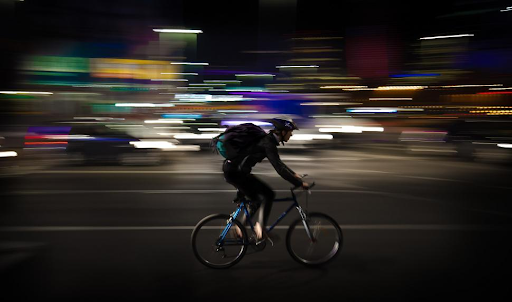
With the clocks now changed and millions of commuters facing journeys home in complete darkness, alarming new data has exposed the severe risks facing cyclists on UK roads.
New analysis from Fletchers Solicitors has revealed a stark reality about the UK’s dark commute. Analysing Department for Transport data from 2021 to 2023, the firm found that nearly 1,200 cyclists were killed or seriously injured during dark commuting hours across Britain.
In total, almost 5,000 cycling casualties were recorded in darkness during weekday commuting hours, including 1,162 serious injuries and 18 tragic deaths. The data suggests that the risk is growing, with the death and serious injury rate around 9% higher in 2023 than in 2021.
Local and regional hotspots:
Seven areas had a casualty rate more than twice the national average (which sits at 18 deaths and serious injuries per 100 million commuting-hour cycling miles).
Area | Dark commute deaths and serious injuries per 100 million commuting-hour cycling miles |
Greenwich | 46 |
Sheffield | 45 |
Leeds | 44 |
Kingston upon Thames | 39 |
Merton | 39 |
Bournemouth, Christchurch and Poole | 39 |
Kingston upon Hull | 38 |
Manchester | 35 |
Croydon | 35 |
Hammersmith and Fulham | 34 |
Regional differences:
Region or nation | Dark commute deaths and serious injuries per 100 million commuting-hour cycling miles |
North West | 24 |
Yorkshire and the Humber | 23 |
North East | 22 |
London | 22 |
South West | 18 |
South East | 15 |
East Midlands | 14 |
East of England | 13 |
West Midlands | 13 |
Wales | 12 |
Scotland | 12 |
Greenwich, Sheffield, and Leeds were among the areas with the highest casualty rates. Greenwich recorded around 46 deaths and serious injuries per 100 million commuting-hour cycling miles, compared with a national average of 18, making its rate more than two and a half times the national average.
Regionally, the North West has the highest rate at 24 deaths and serious injuries per 100 million commuting-hour cycling miles. This is double the rate in Scotland and about 33% above the national average.
Lit roads and junctions
The research also dispels the myth that streetlights guarantee safety. Around 81% of cyclists killed or seriously injured in the dark during weekday commutes were on roads where streetlights were switched on.
Furthermore, junctions remain significant danger zones. Across weekday commuting hours in both daylight and darkness, 37.9% of cycling casualties occurred at T-junctions or staggered junctions.
Road safety tips for the dark commute
With darker commutes now the norm, Fletchers Solicitors is reminding all road users of their responsibilities. The Highway Code sets out clear guidance for staying safe:
At junctions: Drivers and motorcyclists should always let cyclists travelling straight ahead pass before turning across their path.
When overtaking: Drivers should leave at least 1.5 metres when passing cyclists at speeds up to 30mph. They should give even more space at higher speeds, at night, or in bad weather.
When cycling at night: Cyclists must have their lights switched on, with a white light at the front and a red light at the rear.
Lena Farnell, Associate & Team Leader at Fletchers Solicitors, comments on the human impact behind the data:
"Seeing such stark numbers relating to cyclists being killed or seriously injured really highlights just how vulnerable these road users are. Evening commuting can be overstimulating, especially when there are various light sources on the roads. When motorists don’t allow space, regardless of visibility, collisions will happen.
"It’s true that cyclists have a responsibility to make themselves as visible as possible, but this doesn’t mean that other road users don’t have a duty of care to look out for vulnerable riders. When there has been a collision, there are a lot of contributing factors to consider – time of day, weather, and lighting all play a part. It would be wrong to assume that a cyclist is responsible for a collision simply because they didn’t have their lights on or weren’t wearing reflective gear.
"Ultimately, road users should be vigilant, kind, and patient. The cyclist you are passing is someone’s loved one, likely on their way home from work. Everyone has the right to be on the road, and we need to accept that we all owe each other respect so that we can all travel home safely."
Contributor at The London News