Why pedestrianising Oxford Street alone won’t save Britain’s most famous shopping street
Pedestrianising Oxford Street could transform London’s most famous shopping street, but Justin Langshaw argues traffic-free alone will not be enough.
15 October 2026 · 7 min read
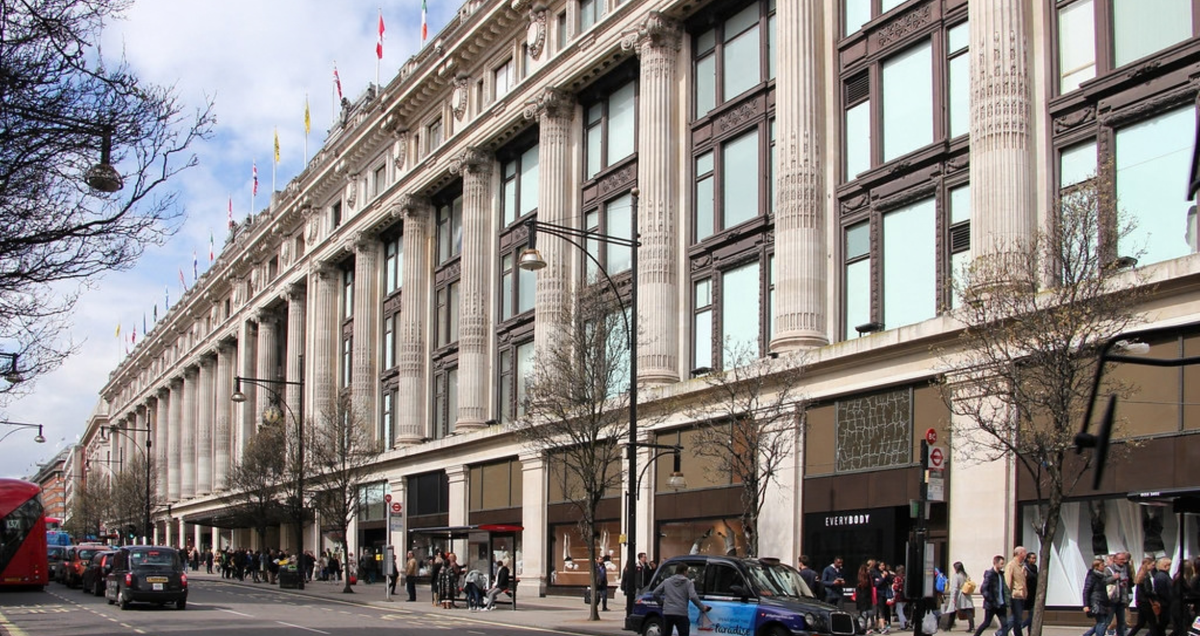
Pedestrianising Oxford Street has been talked about for years, and I think most people who regularly use it have welcomed the recent news that, by the time we’re deep into Christmas shopping, London’s most famous retail street will be vehicle-free.
At the moment, a typical day will see the street full of shoppers mixing perilously with road users. Huge numbers of people are squeezed onto relatively narrow pavements while buses, taxis and garish rickshaws take up a considerable amount of space through the middle. Giving more of that space back to pedestrians is an obvious opportunity.
But I don’t think we should kid ourselves that removing the traffic is going to fix Oxford Street by itself.
Pedestrianisation is not a silver bullet. As the founder of STAMP Design Consultancy, much of my work has focused on how physical spaces can give people a reason to visit, stay and come back. What interests me much more is what opportunities it presents for visitors and local buildings. And let’s face it, Oxford Street does not really have a footfall problem. It has a dwell time problem.
What surprises me whenever I venture there is the sheer volume of people compared with how relatively little retail there is that feels genuinely worth making a special journey for. Oxford Street is one of the best-known shopping streets in the world, yet if you actually stop and ask what is drawing all those people there, the answer is not as obvious as it once was.
There are still major destinations, of course. Selfridges is omnipotent, Adidas a big draw and there is life in John Lewis yet. But there was a time when Oxford Street itself was the main attraction.
Topshop was a legitimate fashion mecca. At its peak, Arcadia brands, which littered Oxford Street and had their offices nearby, accounted for 12% of all women's clothing in the UK.
Gap, HMV, Miss Selfridge, House of Fraser, Debenhams, Principles, Dorothy Perkins and Oasis all sat in a broad middle market of lifestyle shopping and appealed to an enormous cross-section of shoppers.
Most of those are now sunk or sinking, and Oxford Street has never completely established what replaces them, leaving itself open to a broadside from the Pirates of American Candy.
Too many come out of Oxford Circus station, walk straight to Selfridges, or one or two other notable destinations, buy what they came for and leave again. They have contributed to the footfall numbers, but that does not necessarily mean they have contributed very much to the wider street if they stop nowhere along that journey.
The goal, and the opportunity, is a customer who arrives with leisure in mind and spends several hours in the area. They visit a few shops, stop for something to eat, have a coffee, discover somewhere they had not planned to visit and perhaps do something completely unrelated to shopping while they are there. The street becomes more of a destination, not a necessary evil between Oxford Circus and a diminishing number of landmark flagships.
The death of the middle market
If you walk a few minutes over to Regent Street, the juxtaposition is like the good, clean, successful twin standing next to its brash sibling, now suffering the consequences of poor lifestyle decisions.
Regent Street has a clear identity. Heavily weighted towards premium brands, the stores themselves tend to be beautifully executed and you understand the sort of environment it is trying to be. It feels uplifting to walk into carefully curated boutiques, like some of their lustre rubs off.
Oxford Street has lost that fairy dust, and part of that comes back to the erosion of the middle market.
For years, Oxford Street was built around retailers that felt aspirational enough to make people want to visit, but accessible enough to appeal to enormous numbers of shoppers.
Gap is a good example of how dramatically that market has changed. There was a time when getting one of those big blue Gap boxes at Christmas felt like a pretty decent present. The brand managed to create an emotional association around relatively simple products.
Today, if somebody gave you a generic grey hoodie, you know you could probably find something similar online, have it delivered tomorrow and potentially pay less for it. This is no criticism of Gap. It simply illustrates how commoditised and accessible everything has become. By being cheap and easy, the value has been eroded. The only way to combat that is ultra-low prices as we race to the bottom.
HMV faced another version of the same challenge when music and entertainment moved online. Debenhams and House of Fraser belonged to a department store model that came under enormous pressure. Topshop disappeared. Forever 21 arrived with enormous fanfare and then disappeared again.
You cannot recreate the Oxford Street of 20 years ago because the retail market that supported it no longer exists. The much more interesting question is what comes next.
There are reasons to be optimistic
Some of Oxford Street’s biggest former retail sites are already being rethought in ways that give us a clue.
The former BHS site at 33 Cavendish Square is set to become a mixed-use development bringing together offices, flagship retail and cultural and creative space, while the former Debenhams flagship at 334 Oxford Street has already been redeveloped as The M Building, combining office and retail uses rather than trying to recreate another traditional department store.
And around the wider area, leisure is increasingly becoming part of the mix too.
One example we have seen through our work at STAMP is Monopoly Lifesized on Tottenham Court Road, operated by our client The Path Entertainment Group, is a good example. It takes a familiar entertainment brand and turns it into an immersive physical experience that people come into central London specifically to do. While they are there, they can eat, drink, shop or continue their day or evening with a West End show.
Oxford Street is never again going to be the best place to shop the widest choice of items quickly and cheaply. But it can still be the best place to explore, enjoy and experience what retail, leisure and life have to offer. Oxford Street needs to involve a broader mix of retail, hospitality, leisure, culture and workplaces, and to maximise the new opportunities that having safe, open outside spaces can bring.
There is a real opportunity for the UK's most famous shopping street, but it must get it right this time.
Placemaking matters
Pedestrianisation can support positioning Oxford Street as a new way to enjoy central London, provided we think about it as more than simply removing vehicles.
I would like to see Oxford Street become closer to the piazza-style environments you see in European cities, where retail sits alongside food, drink and good-quality public space and people actually want to spend time. Yes, it’s lovely for customers, and for businesses, it matters enormously.
Stores do not exist in isolation. The experience starts long before somebody walks through the front door. If the street outside feels chaotic, unpleasant or dirty, the store itself is having to work much harder or be tarred with the same brush.
The other aspect is culture. We need authentic, natural and sustainable culture to emerge in these spaces. Not another branded pop-up bar or kitschly lawned Wimbledon promo.
Create a better, believable and sustainable place and suddenly you have a relatable proposition, both for customers and for the calibre and mix of businesses deciding whether they want to invest there.
What business doesn't want to be in a popular and authentic cultural hub? What business wants to be somewhere that is transient, culturally vacant and being flogged off on the cheap?
Pedestrianisation is much more interesting than a transport project. It could and should be a cultural turning point.
There are practical problems to solve
Of course, there will be compromises.
Taxis have to go somewhere. Retailers still need deliveries. Accessibility has to be properly considered and businesses cannot function if stock cannot reach them.
But these are operational and design challenges, rather than arguments for preserving the status quo.
One of the objections you hear is: how are the shops going to receive deliveries if vehicles can’t drive down Oxford Street? But we already manage exactly this problem elsewhere. Newcastle has pedestrian zones where goods vehicles are given timed access and businesses are serviced through designated loading arrangements, while Manchester has major pedestrianised retail areas where deliveries and vehicle access are similarly managed around the needs of pedestrians.
Oxford Street is not facing a completely new logistical problem that no other city has ever had to solve.
The same goes for taxis. Of course taxi drivers would rather retain direct access to Oxford Street, and there will inevitably be people who lose out from the change. But when you redesign a space this significant, you have to look at the overall experience you are trying to create rather than designing everything around one particular user group.
Something has to give if Oxford Street is genuinely going to change.
And despite everything I have said about what has gone wrong over the years, I am optimistic about what could happen next. The former department stores are already being reimagined, leisure and experience are becoming a bigger part of the West End offer, and pedestrianisation gives us an opportunity to create a much better environment around all of it.
Get it right and, who knows, I might even brave the Oxford Street crowds at Christmas again.
Contributor at The London News