Four in ten Londoners say they could go three days without leaving home
From working from home to online errands, new research reveals how modern life is making movement increasingly optional for Londoners.
5 October 2026 · 3 min read

Four in ten Londoners say they could comfortably spend three of more days without leaving home, as new research reveals how modern conveniences are removing movement from everyday life.
Life in the capital might feel busy, but new research suggests that doesn't necessarily mean Londoners are moving.
According to new research from ASICS, Londoners report spending 84% of their waking day not moving, while almost four in five (79%) say modern life has made it easy to spend an entire day barely moving.
From working from home and ordering groceries to streaming entertainment and catching up with friends online, many of the activities that once required people to leave the house can now be done from the sofa.
More than half of Londoners (55%) say they regularly complete errands online rather than in person, while 45% often socialise by phone or video instead of meeting face to face.
The impact of moving less
The research suggests this increasingly sedentary lifestyle may be taking a toll on how Londoners feel.
84% of people living in the capital report experiencing negative symptoms they attribute to not moving enough, including low mood, stress and poor sleep.
The findings form part of ASICS' new Movement Conservation Report, which highlights how convenience-driven routines are reducing daily movement and affecting wellbeing.
David Raichlen, professor of biological sciences and anthropology at the University of Southern California, said:
We've built a world that makes movement optional. We can work, shop, socialise and be entertained without ever really moving and while that's convenient, our bodies and minds still depend on regular movement to stay healthy.
Can a workout make up for a sedentary day?
The research has also prompted questions about whether exercise alone is enough if the rest of our waking hours are increasingly sedentary, behind a desk or screens.
Professor Brendon Stubbs, a leading researcher in movement and mental health at King's College London, said:
A thirty-minute run doesn’t undo fifteen hours of stillness. It’s not just the weekly total that matters – it’s the shape of the whole day.
Even among those classified as Active, exercising for 150 or more minutes a week, those spending the day in front of a screen reported an 11% lower State of Mind score than those spending just one to two hours on screens.
Has modern life made movement optional?
To bring the findings to life, ASICS has released a short nature-inspired documentary, Human Nature, narrated by the award-winning Sigourney Weaver, to explore how modern environments are impacting physical activity levels.
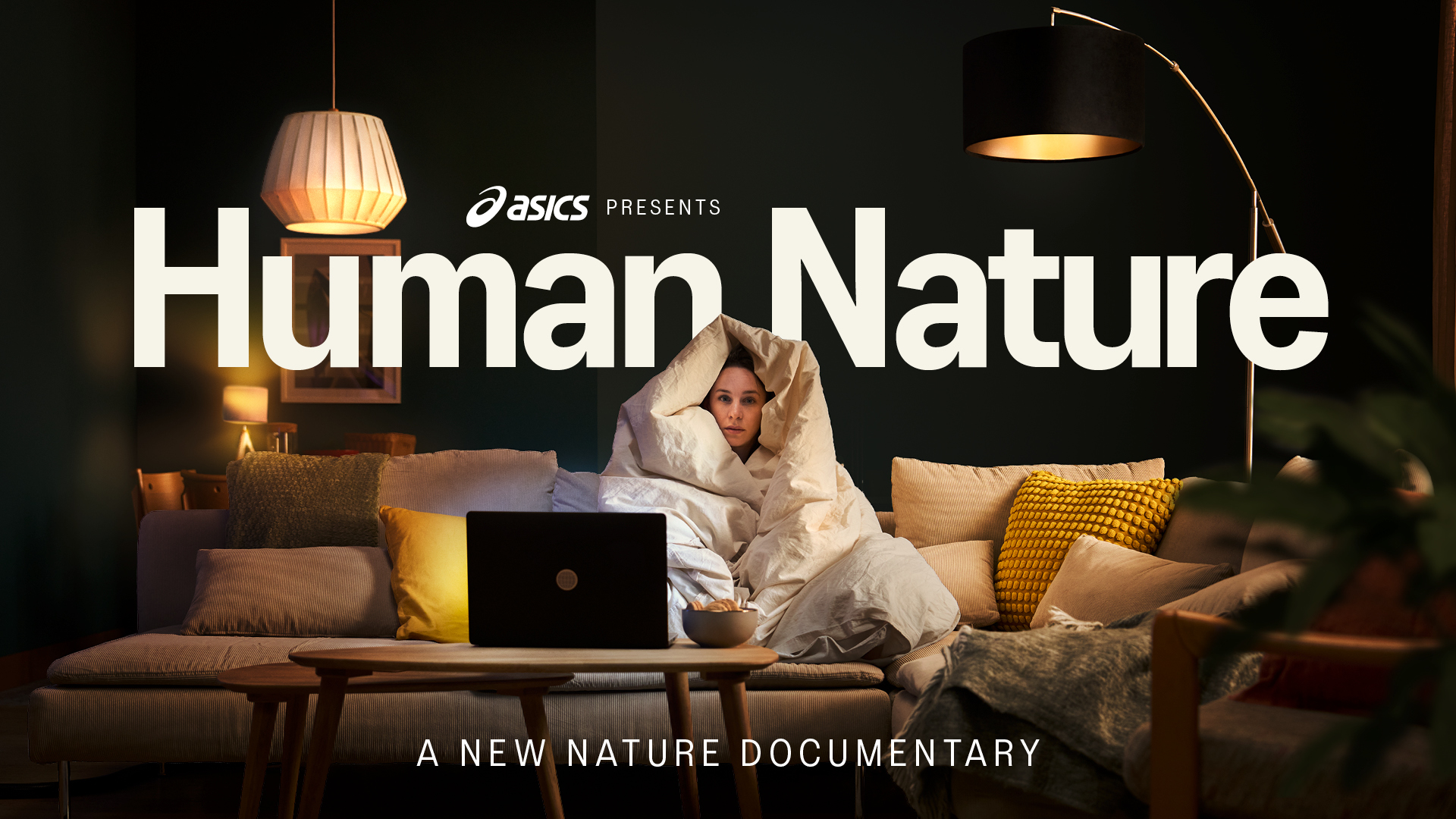
The film depicts familiar modern behaviours, from spending long stretches at a desk to scrolling from the sofa, through the lens of a traditional nature documentary.
But reversing the trend does not necessarily mean finding time for another intense workout.
Instead, experts suggest putting small opportunities for movement back into everyday routines - whether that's walking to pick up a coffee rather than ordering one, taking a call while walking or taking a short walk before or after a day of working from home.
Can 15 minutes make a difference?
Previous ASICS research found that just 15 minutes and nine seconds of movement can help deliver a measurable uplift in mental state, suggesting that starting small can still be worthwhile.
Hayley Jarvis, head of physical activity at Mind, said:
At Mind, we know movement can be a powerful tool for supporting mental wellbeing.
This research is an important reminder of how easily modern life can remove movement from our days, especially for the youngest adults, and the impact this can have on our mental wellbeing.
ASICS is encouraging everyone to take ‘15 Minutes to Thrive’ this World Mental Health Day, with the campaign aiming to show that adding movement back into the day does not have to mean committing to a major new fitness regime.
Gary Raucher, Global Head of Marketing, ASICS, said: “For more than 75 years, ASICS has been guided by the belief that movement transforms not just the body, but also the mind. It’s why we’re called ASICS. Our name comes from the Latin phrase Anima Sana In Corpore Sano - a Sound Mind in a Sound Body.
“Today, as modern life quietly designs movement out of everyday life, we believe it’s more important than ever to remind people of the power of movement. We hope to inspire people everywhere to move for just 15 minutes, because even small amounts of movement can make a meaningful difference to both body and mind.”
Contributor at The London News