Pharmacies to treat migraines and acne without GP appointments in major NHS expansion
The NHS is expanding Pharmacy First to cover migraines, acne, and other ailments directly at community pharmacies without requiring a prior GP appointment.
9 October 2026 · 4 min read
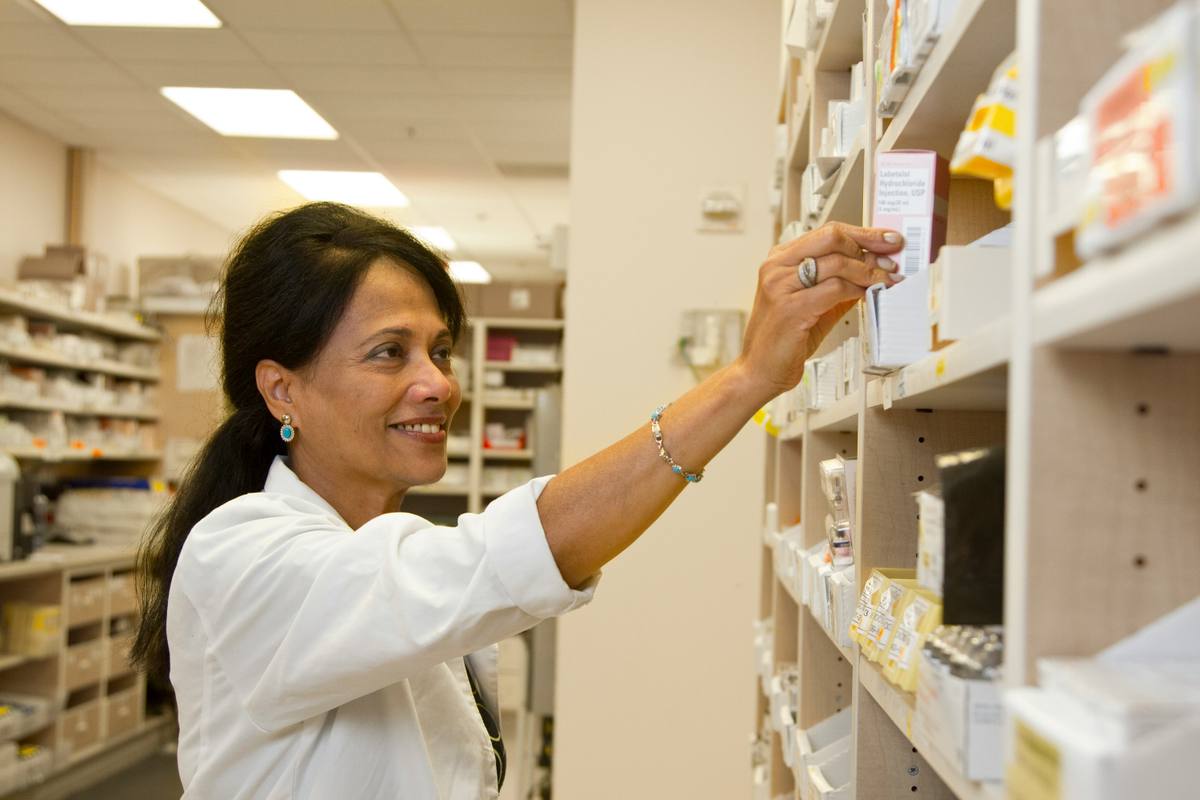
Patients in England will soon be able to receive treatment for migraines, acne and several other common conditions directly from participating pharmacies, without first needing an appointment with their GP.
The NHS is expanding its Pharmacy First service this autumn, allowing suitably qualified pharmacists to assess and, where appropriate, prescribe treatment for five additional conditions: low-frequency episodic migraine, mild to moderate acne, scabies and certain skin infections, acute outer-ear infections and seasonal allergic rhinitis in children.
The change is significant because it moves community pharmacy further away from being seen simply as somewhere medicines are collected and towards becoming a more accessible first point of clinical care.
Abbas Kanani, pharmacist and independent prescriber, said:
“For many patients, getting treatment for a relatively straightforward condition can currently mean trying to get a GP appointment and then visiting a pharmacy afterwards. If pharmacists can safely assess and treat more of these conditions directly, it removes an unnecessary step for the patient while freeing up GP appointments for people with more complex healthcare needs.”
Kanani added that the expansion should not be seen simply as making medicines easier to obtain.
“The important part is the clinical assessment. Pharmacists are trained to recognise when a condition can be treated safely in the pharmacy and, equally importantly, when symptoms need to be referred to a GP or another healthcare professional.”
Pharmacy First Delivers Millions of Consultations
Pharmacy First was initially launched to allow pharmacists to assess and treat seven common conditions, including sore throats, sinusitis, shingles, infected insect bites, impetigo, earache and uncomplicated urinary tract infections in women under 65.
NHS England says around 14 million Pharmacy First consultations have now taken place, including approximately seven million consultations for the original common-condition pathways.
The expansion therefore represents more than simply adding a few treatments to the list. It is another indication that pharmacists are becoming increasingly integrated into primary healthcare.
That could be particularly important as the NHS approaches winter.
A&E departments recorded their busiest summer on record in 2026, with more than 7.2 million attendances across June, July and August.
If pharmacists can safely manage more patients with common conditions, GP surgeries and emergency departments should have more capacity for people who genuinely need their services.
Clinical Assessments and Prescription Boundaries
Greater access to treatment does not mean every patient who walks into a pharmacy will leave with medication.
A pharmacist still needs to take an appropriate medical history, assess symptoms, consider other medicines being taken and look for warning signs that may require referral.
Take migraine as an example.
A patient with a history of typical migraine symptoms may be suitable for treatment through a pharmacy pathway. Someone experiencing a sudden severe headache unlike anything they have experienced before is a very different clinical situation and could require urgent medical assessment.
The same applies to acne. Mild or moderate acne can often be managed effectively in primary care, but severe acne, significant scarring or symptoms that are having a major psychological impact may warrant further assessment or referral.
Kanani said:
“Good healthcare isn't about prescribing something to everyone who asks for treatment. It is about making appropriate care easier to access, while making sure patients with warning signs or more complicated conditions are identified and referred appropriately.”
Community pharmacy has changed substantially over the last decade.
Pharmacists already routinely provide vaccinations, blood-pressure checks, emergency contraception, medication reviews and advice on a huge range of conditions.
Increasing numbers of pharmacists are also qualified independent prescribers.
The latest NHS proposals recognise that clinical expertise and allow patients to access it more directly.
There are around 10,000 community NHS pharmacies across England, meaning pharmacies are one of the most accessible parts of the healthcare system.
For many people, particularly those working during normal GP opening hours, parents with young children or people struggling to obtain a convenient appointment, being able to walk into a local pharmacy can make a meaningful difference.
Expanding pharmacists' clinical role will only work if pharmacies are properly supported.
Assessing and prescribing for patients requires consultation time, appropriate staffing, access to relevant medical information and good communication between pharmacists, GPs and the wider NHS.
Kanani said one of the next challenges will be ensuring that healthcare professionals have access to the information they need when treating patients.
“As more healthcare is delivered outside the traditional GP surgery or hospital setting, the systems supporting that care have to develop as well. Pharmacists need appropriate access to relevant patient information and clear communication with the rest of the healthcare system. Otherwise, we risk modernising how patients access care without modernising the infrastructure behind it.”
The long-term opportunity is much bigger than Pharmacy First.
A healthcare system in which pharmacists can deal with appropriate minor and routine conditions, GPs can concentrate on more complex cases and hospitals focus on patients requiring specialist care makes sense.
For patients, though, the immediate change is much simpler.
For an increasing number of everyday health problems, the first question may no longer be: “Can I get a GP appointment?”
It may simply be: “Can my pharmacist help?”
Abbas Kanani MRPharmS is a UK pharmacist and independent prescriber with more than 13 years' experience in community and digital pharmacy.
Featured Photo by National Cancer Institute on Unsplash.
Contributor at The London News