1 in 3 men taking testosterone/steroids are unaware it causes complete sperm shutdown
New study from CRGH (Centre for Reproductive and Genetic Health) and male diagnostic specialist, Examen.
6 November 2026 · 8 min read
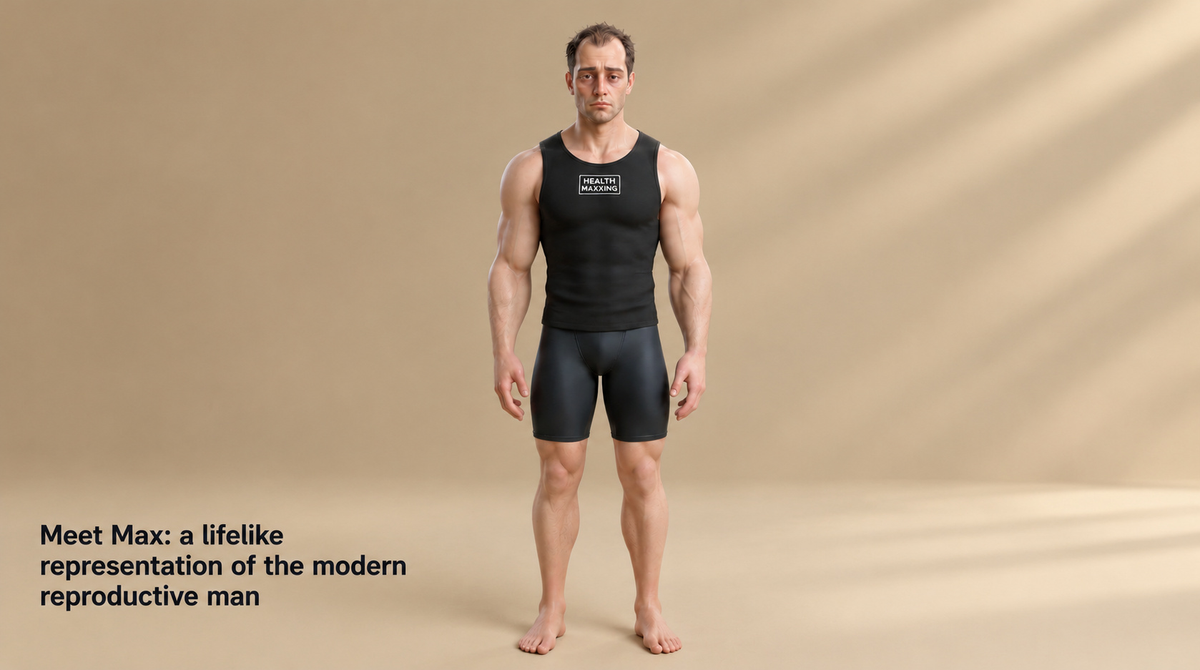
Nearly half of all young British men (49.1%) have no idea that gym steroids and testosterone treatments directly damage male fertility, according to nationwide research released today by leading London fertility clinic CRGH (Centre for Reproductive and Genetic Health), in partnership with male fertility diagnostic specialist Examen.
Among active users of testosterone replacement therapy (TRT) or anabolic steroids, the lack of knowledge is worrying: one in three (33.3%) had zero awareness that these medications can reduce their sperm count to zero. Worse still, knowing the risks doesn’t seem to stop them. More than a quarter (27.8%) of men admitted they simply don’t care about the impact on their fertility.
Timed to mark the launch of Men’s Health Awareness Month and National Fertility Awareness Week (2–6 November), the study of 2,000 UK males aged 18 to 40 reveals that an estimated 600,000 British men are currently taking hormone medications that shut down natural sperm production. This has been driven by the growth in private commercial clinics who are privately prescribing testosterone to men in the UK to combat low energy and libido (3.3%), as well as those buying it from unregulated gym floor and social media driven black markets (3.5%) who are operating without clinical safety monitoring.
The findings have exposed a big generation gap: young men in their reproductive prime are the least knowledgeable about their own sperm health. Nearly three quarters of 18-25 year olds (72.8%) are unaware that regular exposure to heat, such as daily gym saunas, steam rooms, and hot tubs, damages sperm production, compared to 60.8% of 36–40-year-olds.
Furthermore, 18–25s are nearly three times more likely to participate in online ‘health-maxxing’ trends (9.3%) than men aged 31–35 (3.5%), despite being the least informed about the severe reproductive fallout. They are equally blind to biological ageing: more than half of 18 to 25-year-olds (51.5%) don’t realise male fertility declines with age, compared to a third (33.6%) of men approaching 40.
Geographically, London has emerged as England’s primary blind spot. London men recorded the highest rates of illicit steroid and testosterone use in England (5.5%), yet only four in ten (41.3%) realise these substances destroy sperm, compared to nearly 60% of men in the North West (58.2%) and South West (58.8%). Londoners were also the least aware nationally that vaping (37.5%) and heat exposure (31.1%) can impair sperm parameters.
Beyond biological damage, the survey has also highlighted how an infertility diagnosis would cause a severe psychological and personal crisis for many men. Male factor issues account for roughly half of all conception struggles, yet receiving a diagnosis carries real stigma. Among men who want or are trying for children, 38.6% anticipate low moods, 36.1% suffer with anxiety and 33.1% have reduced self-esteem, whilst 14.6% felt emasculation after being diagnosed with a fertility issue.
While 64.1% believe their friends would be supportive, over a third (35.9%) feel their friends wouldn’t stand by them if they faced fertility difficulties, with more than one in ten (11.0%) expecting to be mocked and receive unsupportive comments.
Too embarrassed to see a doctor, British men are also turning to Dr ChatGPT in secret. More than a third across the UK (36.6%) search Google for fertility advice and nearly one in four (22.6%) ask AI bots, rising to 37% among men actively trying for a baby who risk bad advice over proven medical facts.
The stigma around infertility is a real issue among younger generations: 1 in 11 men aged 18 to 25 (9.1%) say discovering they had a fertility problem would trigger suicidal thoughts, compared to 5.8% of men aged 36 to 40. Yet men continue to suffer in silence; nearly half of those surveyed (45.4%) say they would hide an infertility diagnosis from the person they are trying to conceive with. Over a quarter (26.1%) warn it would cause strain in their relationship, and 7.2% admit they would think about walking away from their partner entirely out of shame (note: Anyone affected by these issues can contact Samaritans free on 116 123 or visit samaritans.org)
The report highlights a simple fix to give men more information to make changes. Three quarters of men (75.5%) admit they would happily take a sperm test if it was treated like a standard gym stat like body fat percentage, rather than an emergency doctor’s appointment.
Beyond testing, it also reveals an appetite for proactive action: more than four in 10 men nationally (43%) say they would consider freezing their sperm for the future, treating fertility preservation as an insurance policy against modern lifestyle damage and ageing.
Mr Wael Saab, fertility consultant and medical director at CRGH, said:
“If you walk into any gym or follow people on social media, you will see men tracking their macros, timing their workouts, and obsessing over every marginal gain. But when you look deeper, many of them are causing long term silent damage to their reproductive health.
“Whether it’s unmonitored private prescriptions or gym-floor black market medication, the biological effect on the brain is the same: external testosterone shuts off natural hormone production. Combine that with daily hot tubs, saunas, and extreme diets, and men in their twenties are accidentally shutting down their fertility while trying to look their physical best.
“The real concern is that most men will only discover this after twelve to eighteen months of painful conception delays, watching their partner go through invasive tests, or waiting months for an initial GP appointment. Male factor issues account for half of all conception struggles, yet men still feel they can’t talk about it.
“Age catches up with all of us, and sperm face the exact same reality: biological time matters. Men should not meet that with fear or denial - knowing where your fertility stands turns uncertainty into a plan. Having a simple semen analysis takes ten minutes and is the first step for any man planning or thinking of starting a family. Checking your sperm carries no shame; it is just another vital sign of how healthy you really are.
“This November, let's bring male fertility into focus. We need to break the taboo and speak openly about male fertility, because the sooner we start the conversation, the sooner couples get the answers they need.”
Tristan Taylor, head of commercial and partnerships at Examen, said:
“Men have never been more switched on about their health. They know their resting heart rate, their sleep score and their body fat to the decimal point. But almost none of us know a single number about our sperm, even though it’s one of the most sensitive signals we have of what’s going on inside the body.
“This research doesn’t show that men don’t care. It shows they don’t have the information. Three in four said they’d test if it felt like any other health metric, and that’s how it should feel. Sperm health responds to how you train, sleep and eat, and to what you put into your body. A lot of it can improve once you change course, but only if you know where you’re starting from.
“The answer isn’t to put men off the gym. It’s to give them a baseline, so they can see what their choices are actually doing and make decisions based on real data rather than whatever their feed is telling them. Testing should be something you do at 25 because you care about your health, not something you get sent for at 35 when you are in crisis.”
For more information, the ‘Let’s bring male fertility into focus’ campaign website goes live 00.01 on 2 November 2026.
KEY STATISTICS AT A GLANCE
Reproductive health metric / habit | UK Benchmark | Key info |
All UK men aged 18–40 unaware TRT and anabolic steroids harm male fertility | 49.1% | National Knowledge Gap: Nearly half of all British men (~5 million) do not realise gym hormones damage fertility. |
Active TRT / steroid users unaware these compounds reduce sperm counts to zero | 33.3% | 1 in 3 active users had zero idea exogenous testosterone shuts off sperm production entirely. |
Active TRT / steroid users who express zero concern about losing their fertility | 33.3% | The Indifference Factor: 1 in 3 users prioritise physical appearance or muscle gains over future family planning. |
Illicit steroid and testosterone use in London (past 6 months) | 5.5% | Capital Epicentre: Highest illicit use in England, yet Londoners are the least aware TRT harms sperm (41.3%). |
Admitted illicit steroid / non-prescribed testosterone use (past 6 months) | 3.5% | Capital Epicentre: London leads England at 5.5%, representing ~345,000 young men taking unregulated compounds nationwide. |
Heat/sauna exposure awareness (18-25) | 72.8% | Thermal Blindspot: Nearly three quarters of young men do not know heat halts viable sperm generation (vs. 60.8% of 36–40s). |
Aware that vaping / e-cigarettes impair sperm health | 45.3% | More than half unaware (54.7%): Highest in South West (51.6%); worst in London (37.5%) and Wales (38.0%) |
Aware that smoking cigarettes harms male fertility | 67.9% | The Youth Deficit: High overall, but drops to just 54.9% among 18–25s and 54.3% in Wales (vs. 76.5% of 36–40s) |
Aware that alcohol consumption damages fertility | 68.9% | 1 in 3 Unaware (31.1%): Led by the South West (74.5%); lowest in London (61.6%) and among 18–25s (58.0%) |
The TikTok fad divide - social media 'health-maxxing' uptake | 5.9% | Generational Disconnect: London & West Mids lead at 9.6%; 18–25s (9.3%) triple 31–35s (3.5%), while South West rejects it (1.3%). |
Men aware that poor-quality sleep / sleep deprivation damages sperm parameters | 49.7% | Nearly 6 in 10 unaware: Only 41.4% nationally link poor sleep to sperm health, led by the South West (49.7%) and lowest in London (33.7%). |
Reproductive health metric / habit | UK Benchmark | Key info |
Men who would conceal an infertility diagnosis from the partner they are trying to conceive with | 45.4% | Suffering in Silence: Nearly half of men would hide an abnormal result from their partner out of shame. |
Men who would consult search engines (Google / Bing) for sperm advice | 36.6% | Over a third turn to search algorithms rather than booking an appointment with their GP and 1 in 4 ask AI bots (22.6%). |
18–25s who anticipate suicidal thoughts following an infertility diagnosis | 9.1% | Acute Safeguarding Crisis: 1 in 11 young men face severe psychological ideation (6.7% UK average). |
Men who would consider walking away from their partner entirely out of fertility shame | 7.2% | Roughly 1 in 14 men would break up their relationship rather than face an infertility diagnosis together. |
18–25s unaware male fertility naturally declines with age | 51.5% | Over half of men in their early twenties believe male fertility is timeless (vs. 33.6% of 36–40s). |
Willingness to test sperm if framed as fitness | 75.5% | The Fix: 3 in 4 men embrace testing when de-medicalised and treated like everyday fitness data. |
Willingness to freeze sperm for the future | 42.6% | Those actively trying to conceive say they would consider freezing their sperm. |
Contributor at The London News