How to avoid a bad Blepharoplasty - FaceRestoration reveals what to watch out for
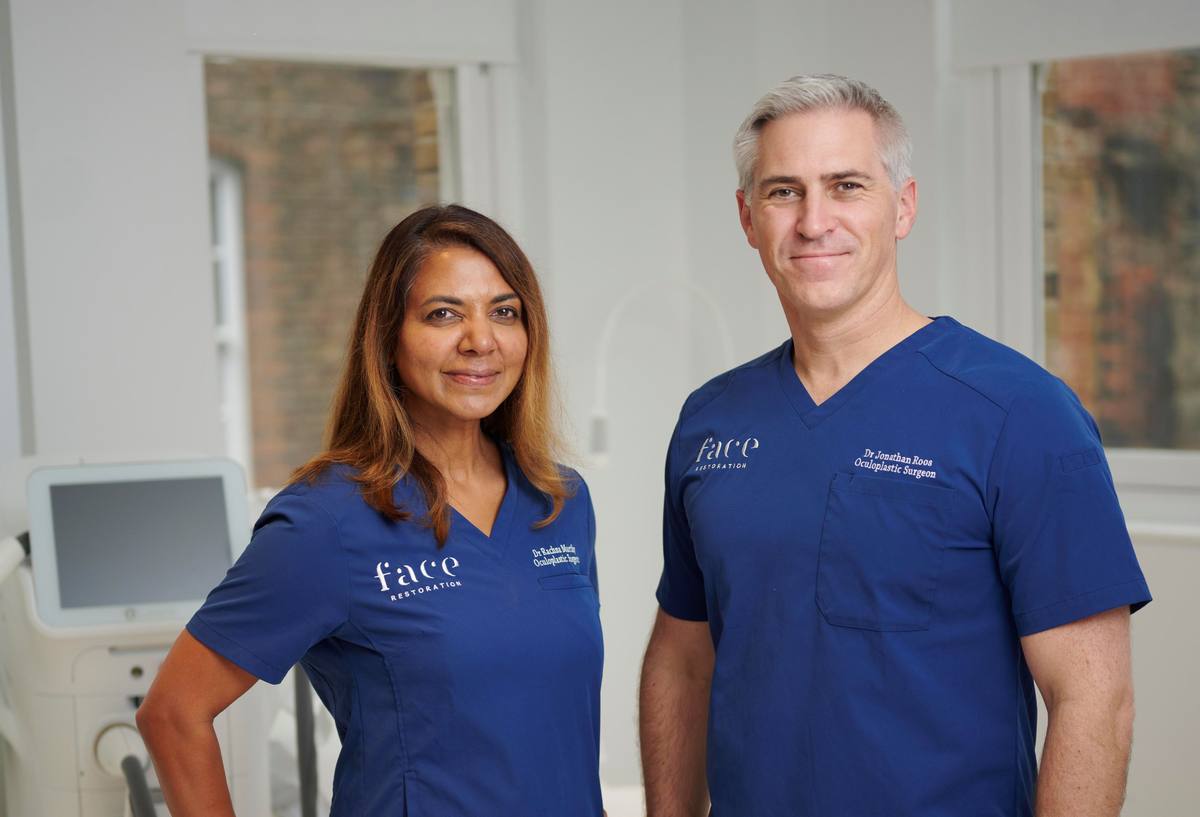
Dr Jonathan Roos and Dr Rachna Murthy, Founders of FaceRestoration provide expert commentary on how to avoid bad blepharoplasty procedures.
8 October 2026 · 2 min read
Have you had any cases before where you've had to correct problematic blepharoplasty procedures that went wrong? How did you fix the issues?
"Unfortunately yes, including cases from general plastic surgeons on Harley Street (who are not specifically trained on lids and underestimate the difficulty), as well as from chain clinics in the UK where surgeons are flown in from abroad for the surgery but who are not UK trained. We see many cases requiring reconstructive surgery – often too much skin has been removed, preventing the incision from closing, which can sometimes lead to infection. One patient came to us at FaceRestoration and we had to move skin from their upper lids to lower lids to fix the issues they were facing. We see great results after reconstruction but we wish patients wouldn't try to go cheap the first time around!"
What is the best practice for blepharoplasty surgeries to avoid these issues?
"The surgeon must be very careful about skin removal; it is an extremely delicate balance. The surgeon must be able to combine surgical and non-surgical techniques and follow the natural anatomy of the face rather than try to impose their own idea of anatomy onto the patient. One size does not fit all. This is something we prioritise at FaceRestoration."
Managing Risks and Choosing the Right Surgeon
What are the key risks with blepharoplasty procedures and how can they be mitigated during and after surgery?
"Key risks include inflammation, scarring, activation of thyroid disease, and prolonged rosacea. These risks are mitigated by constant review – at FaceRestoration we facilitate this via WhatsApp so problems are picked up early and can be tackled with minimal intervention rather than waiting for small issues to become major problems."
Is there anything that patients can do to minimise risks?
"Yes there are. I'd recommend taking the following into consideration, which are all things we ensure at FaceRestoration:
Choose the right surgeon: someone specialised in eyelids, who can perform the surgery under local anaesthetic.
The surgeon should be trained and registered with BOPSS and ASOPRS, and hold an FRCOphth qualification.
Look for excellent Google reviews (we hold a 4.9).
Ensure the surgeon performs the surgery themselves and verify they are available 24/7 via WhatsApp postoperatively.
The surgeon should also assess the skin beforehand to optimise the patient before and after surgery, which includes gut microbiome optimisation, skin care, low-level light therapy, and lymphatic massage."
Contributor at The London News