Brits are battling bad backs multiple times a week
New research for World Spine Day reveals the everyday toll of back pain, sciatica and neck pain – from disrupted sleep and difficulty sitting to missed work.
23 October 2026 · 4 min read
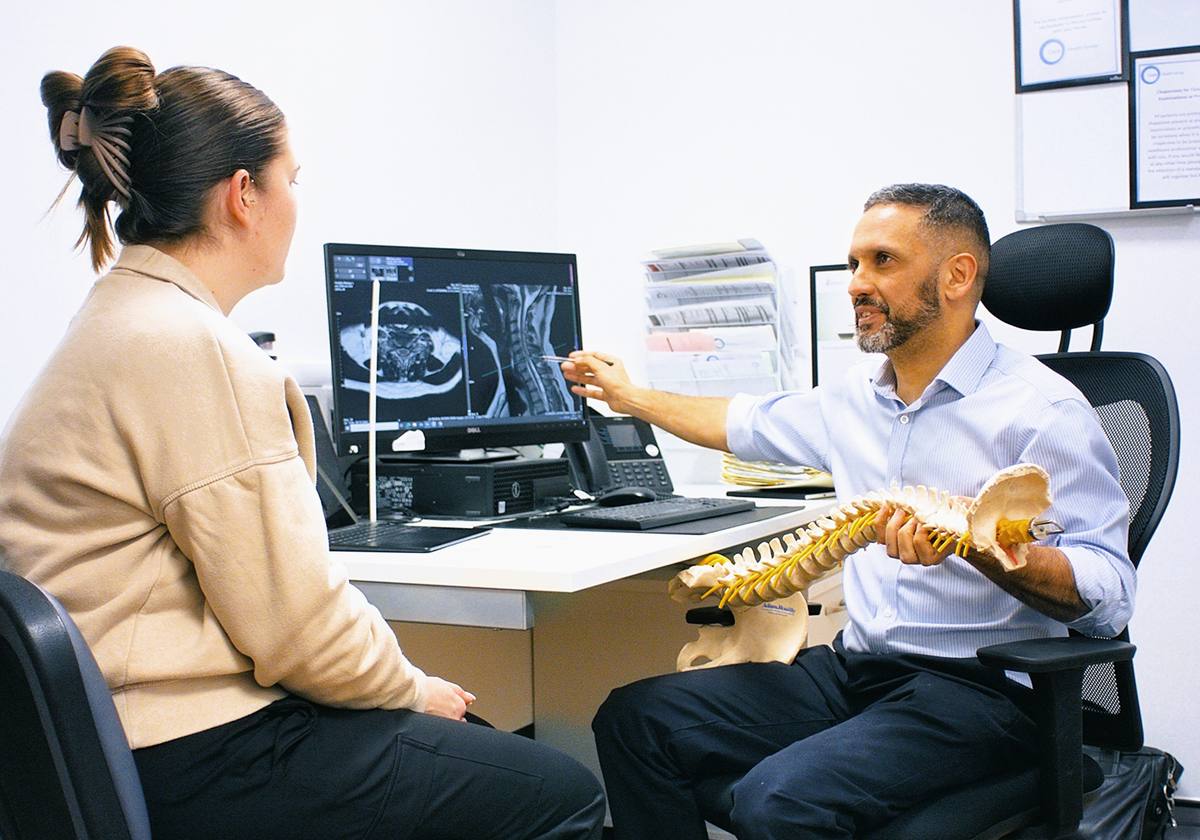
Back pain, sciatica and neck pain are becoming a regular part of life for Brits, with almost one in five UK adults experiencing one of these conditions multiple times a week, new research reveals.
31% based in London felt stressed vs 25% nationally, while 24% experienced pain multiple times a week vs 18% nationally.
The findings, released by Anthony Ghosh MBChB, MD, FRCS (Neuro.Surg) for World Spine Day, highlight the widespread impact of spinal and musculoskeletal problems, not only on people's physical ability to carry out everyday tasks, but also on their sleep, work and emotional wellbeing.
Research found that 18% of adults experience back pain, sciatica or neck pain multiple times a week.
The problem appears particularly pronounced among some groups, who all experience pain multiple times a week:
24% of Gen Z adults (those born after 1996)
24% of 18 - 24 year olds and 24% of 25 - 34 year olds
23% of people in driving jobs
20% of desk-based workers
20% of parents - the figure rises to 32% among single people with children
“From getting through the workday to getting a good night's sleep, the research shows how much pain can interfere with ordinary activities,” says Ghosh.
“These figures reflect a significant change in the patients I see. At the start of my career, neck pain predominantly affected people over 40, but it is now increasingly common among those in their twenties, with looking down at a mobile phone likely to be a contributing factor.
“Similarly, those who spend hours hunched over keyboards can often experience issues due to the muscles supporting the spine becoming weaker, leaving the spinal joints and discs to absorb more of the everyday strain.”
The challenge of the three Ss – Sitting, Standing and Sleeping
Just sitting can also be a bit of a task. Almost a quarter (24%) of adults said their pain made sitting for long periods more difficult. This rose to 37% among millennials and 37% among desk-based workers.
Standing for long periods was made more difficult for 33% of adults, rising to 46% of people in customer-facing or in-person roles and 55% of people in driving jobs.
“Disc tears or herniations can make sitting painful because of uneven pressure on the spine,” says Ghosh.
“Standing may hurt initially too, but the pain often eases with movement. Staying in either position for too long can worsen chronic back pain, so the key is to switch regularly between sitting and standing, take breaks and exercise to strengthen the muscles supporting the spine.
“Some people over 60 experience more pain when standing or walking and find relief when sitting. This may be caused by spinal stenosis, where age-related changes narrow the spine and put pressure on the nerves.”
Sleep was another major factor being impacted by pain, with 32% of adults saying back pain, sciatica or neck pain made sleeping more difficult or prevented them from sleeping normally. This increased to 39% among 55 - 64 year olds, 40% among Gen X, and 50% among people with outdoor jobs.
The impact extends into other everyday activities, with 26% of adults reporting difficulty with household activities and 25% saying walking was made more difficult or prevented.
The emotional impact of a bad back
The research also reveals the psychological burden that can accompany back, neck pain and sciatica.
Almost half (44%) of adults said they feel frustrated or irritable when experiencing these problems, rising to 47% among women. Nearly three in ten (29%) said they feel low or unhappy, while 28% said they feel older when experiencing pain.
Concerns about the future are also common. Almost a quarter (23%) of adults said they worry that their problem could become more serious. This rises to:
25% of men
28% of parents
28% of 25 - 34 year olds
29% of 18 - 24 year olds
Younger adults in particular appear to be experiencing a significant emotional impact. Among Gen Z, 29% said their pain makes them feel anxious or worried, while 34% said it makes them feel stressed.
For people in driving jobs, 40% said they worry about making their condition worse when experiencing back pain, sciatica or neck pain.
Advice on World Spine Day
With today being World Spine Day, the research shines a light on the scale of the problem and the way spinal pain can affect much more than a person's physical comfort.
From parents struggling to lift and carry, to desk workers struggling with prolonged sitting, the findings show that back, neck pain and sciatica can have consequences across almost every aspect of daily life.
“Your spine is part of a much bigger system, so looking after your overall health also helps protect your spinal health,” advises Ghosh.
“Regular exercise, including resistance training, good nutrition and cardiovascular fitness strengthen the muscles and bones supporting the spine, while improving blood flow to the spine and nervous system.
“Keep moving is really what benefits your spine and your whole body.
Contributor at The London News