The fitness specialist using movement and music to support care-home residents with dementia
Fitness specialist James Lewis shares seven accessible, chair-based movement tips to support mobility, memory, and wellbeing in people living with dementia.
21 September 2026 · 2 min read
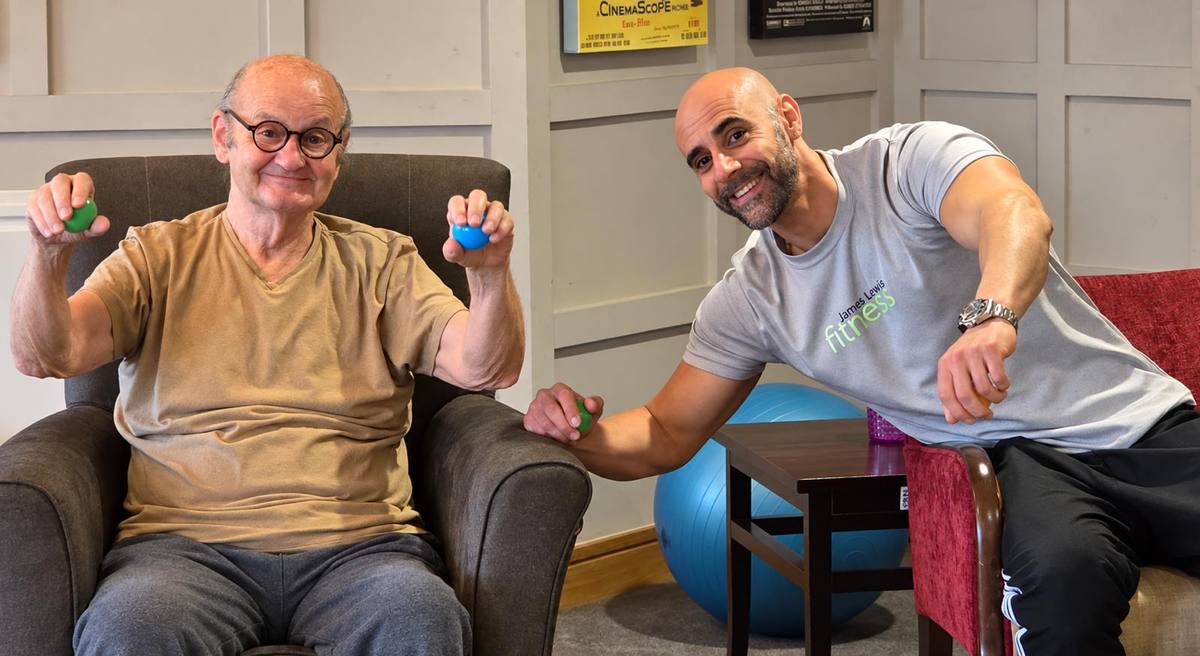
With World Alzheimer’s Day approaching on 21 September, fitness specialist James Lewis shares his practical advice on the role movement can play in supporting people living with dementia.
Inspired by seeing the impact dementia had on his own grandparents, James has developed specialist sessions now delivered across care homes in London, Hertfordshire and beyond.
His sessions combine physical movement, cognitive stimulation, repetition, social interaction and familiar music, with residents exercising to everything from Elvis Presley to Frank Sinatra and Dean Martin.
Seven Ways to Keep Loved Ones Living with Dementia Active
Ahead of World Alzheimer’s Day, James has shared seven simple ways to help a loved one living with dementia stay active:
1. Make movement enjoyable
Exercise shouldn’t feel like a chore. Music, laughter and familiar songs can really help people engage and encourage them to move. Sometimes just seeing someone smile and enjoy themselves is a huge win.
2. Keep exercise simple and accessible
All of our exercises are chair-based, so anyone can take part to suit their level of mobility. Simple arm, leg and upper-body movements can still make a real difference to mobility, coordination, strength and confidence.
3. The power of repetition
Using repetition of movements and exercises matters, it’s amazing to see how certain movements start to become familiar. We have seen this work in practise with residents remembering muscle groups, movements and parts of the routine, which is incredible to see.
4. Get the brain and body working together
Movement can also be a great way of working on cognitive skills. Following instructions, copying movements, reacting to music and remembering sequences all help the brain and body work together.
5. Keep balance and mobility as strong as possible
Balance and mobility are so important. Keeping people as strong and mobile as possible can help with confidence and independence, and can also help reduce the risk of falls. Even though our exercises are chair-based, they can still help with the strength, coordination and control needed for everyday movement.
6. Let music motivate
Music is a massive part of what we do and can have such a positive effect. A familiar song can encourage someone to move, sing, tap their feet, interact with others and become much more engaged.
7. Remember exercise is more than fitness
Of course, improving mobility, coordination, balance, strength and cognitive skills is really important, but it’s not the only thing that matters. Someone smiling, laughing, singing, making eye contact or joining in when they might normally be withdrawn can be just as meaningful.
For more information, visit James Lewis Fitness.
Contributor at The London News