Where to Buy Next: UK’s Emerging Property Hotspots Ranked
Discover the list of the UK's emerging property hotspots. Muve's conveyancing experts have identified the areas you should look into.
3 November 2026 · 7 min read
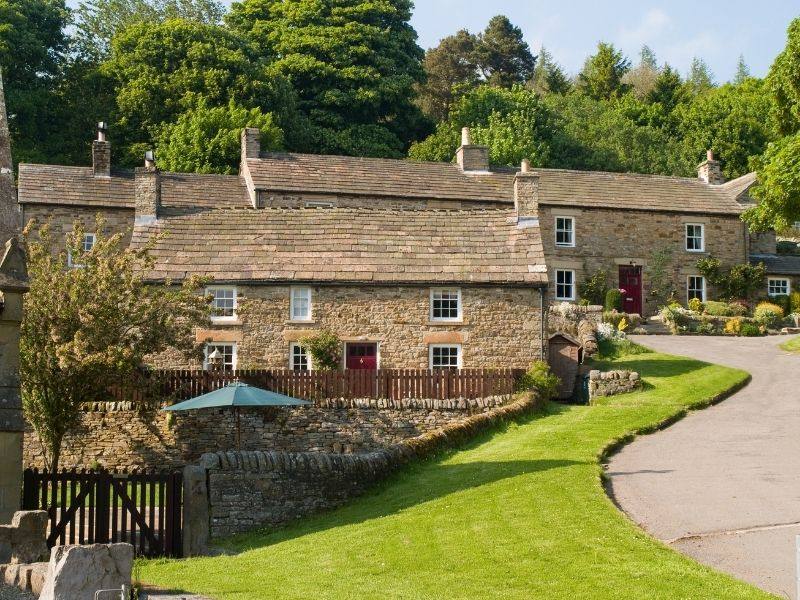
Choosing where to buy your next home, or your first, is never easy. Conveyancing experts at Muve have identified the UK’s fastest-emerging property hotspots, analysing government data from ONS and HM Land Registry across 313 local authorities in England and Wales, ranking affordability, new-build activity, price growth and transaction volume equally to find the next up-and-coming locations.
The findings come as searches for “where to buy a house” have risen 83% in the UK over the past year (Google Trends, July 2026), showing how many buyers are unsure where to start looking.
County Durham tops emerging UK housing locations
Most buyers are chasing the same thing: somewhere affordable and on the up, with new homes landing and prices rising, so their money’s protected if they ever need to sell.
County Durham tops the index as the UK’s most promising emerging location for house buyers. It ranks highly for its affordable housing (£138,767), roughly a ninth of Kensington and Chelsea’s (£1,272,760), the most expensive area in the whole study, alongside steady 4.7% annual price growth and positive new-build activity.
Cumberland in the North West ranks second, scoring highly across the board. While Northumberland rounded out the top three in third, with the highest life satisfaction score (7.68) and annual house inflation score of the top three (5.3%).
Rank | Area | Emerging Hotspot Index |
1 | County Durham | 86.2 |
2 | Cumberland | 78.8 |
3 | Northumberland | 78.0 |
4 | Pendle | 76.7 |
5 | Newcastle upon Tyne | 76.3 |
6 | Rhondda Cynon Taf | 76.2 |
7 | Wigan | 76.2 |
8 | Gateshead | 74.9 |
9 | North Somerset | 74.4 |
10 | City of Kingston upon Hull | 74.3 |
11 | North Lincolnshire | 73.1 |
12 | North East Lincolnshire | 71.4 |
12 | Carmarthenshire | 71.4 |
12 | Wirral | 71.4 |
15 | Flintshire | 71.3 |
16 | Hinckley and Bosworth | 71.2 |
17 | Boston | 70.3 |
18 | Sefton | 69.6 |
19 | West Suffolk | 69.2 |
20 | Leeds | 69.2 |
Nine of the UK’s ten fastest-emerging areas have average house prices below £300,000, roughly a quarter of the cost of Kensington and Chelsea, London’s most expensive borough, with the national average across the study sitting at £321,337.
Somerset and Suffolk lead the South’s emerging property areas
28 of the UK’s top 50 emerging areas (56%) are in the North of England; however, there are still emerging areas in the South to consider. North Somerset leads the way and is the South’s best performer, ranked 9th across the overall index for its high life satisfaction score, a steady 15% increase in dwellings and a 6.1% rise in house inflation.
West Suffolk, Broadland, East Suffolk, and Mid Suffolk all rank well ahead of the competitive South East and South West markets. West Suffolk in particular stands out, combining a below-average house price of £298,038 with new-build growth of 35.7%, suggesting the area could see continued momentum as more buyers look beyond the usual Southern hotspots and into East Anglia.
69% of areas saw a positive increase in house inflation annually
For those looking to profit from a property investment, buying in areas that recorded the biggest annual increases in house prices could offer strong potential for future growth when it comes time to sell. 69% of all 313 areas (216) recorded positive house price inflation over the year, with an average of +1.4%. The North of England and Wales are growing faster than the South: North England averaged +3.5% and Wales +2.9%, compared to just -0.1% across South England.
Preston, in the North West, has seen the biggest increase in house price inflation annually, according to HM Land Registry figures. Other emerging areas with high house price inflation rates include Caerphilly (10.5%) and Hyndburn (9.1%).
Area | Average house price | Annual house inflation |
Preston | £190,442 | 10.6 |
Caerphilly | £200,000 | 10.5 |
Hyndburn | £139,800 | 9.1 |
Pendle | £150,737 | 8.1 |
Blaenau Gwent | £142,421 | 8 |
Birmingham, Leeds and Newham have seen the biggest number of new-build dwellings across the UK
If you’re looking at housing supply by area in terms of property demand, Birmingham has seen the most new-build dwellings, according to the figures. The population of Birmingham has grown 2.9% over five years, 2024 figures suggest, and housebuilding is keeping pace, with over 8,000 new homes and a 6.4% increase YOY, attracting people to the area with its affordable housing, business hubs and transport links around the country.
Other popular areas seeing an increase include Leeds, which ranked second for overall total new builds with 7,187, and Newham, which, although it saw a decrease of 7.6% YOY, overall ranked third with 5,612.
Area | Total new builds last 2 years | Percentage increase or decrease in new builds YOY |
Birmingham | 8,352 | 6.40% |
Leeds | 7,187 | 9.80% |
Newham | 5,612 | -7.60% |
Manchester | 5,402 | 26.20% |
Salford | 5,089 | 3.00% |
North Yorkshire | 5,085 | -13.70% |
Barnet | 4,169 | -3.90% |
East Riding of Yorkshire | 4,122 | -12.10% |
Milton Keynes | 4,039 | -3.60% |
As well as raw totals, some areas have seen truly dramatic year-on-year growth in new builds. Areas such as Lewisham in South London have seen a 698% increase in housing YOY, while house prices are above average, close to £490,000; the area has seen the highest increase in new builds across the study. Other areas such as Stevenage and Southampton have also seen a boom in housing in the last year, registering 326% and 271%, respectively. This could indicate a relatively low initial housing supply.
Birmingham, Leeds and North Yorkshire lead mortgage sale volumes
In terms of mortgage sales volume, as well as new dwellings, Birmingham and Leeds top the list, with 238 and 220, respectively, as of March 2026, according to HM Land Registry data. Although Birmingham ranks 105th in the overall index, Leeds ranks 20th, matching strong transaction volume with genuine price and growth momentum.
While North Yorkshire ranked third, with 25% fewer transactions than Leeds, it still recorded 165 transactions. This suggests demand extends beyond major cities, with rural areas also attracting buyers.
While smaller towns are winning on affordability, bigger cities, Leeds in particular, show stronger buyer demand. For first-time buyers who want the reassurance of an active market, Leeds looks like a strong option based on overall rankings, high transaction volume, and a well-rounded profile.
First-time buyers should head to areas such as Hartlepool, Burnley and Blackpool for affordable housing
For first-time buyers, affordability is usually the top priority when choosing a location in a desired area. Analysis of HM Land Registry first-time buyer figures from April 2026 revealed that the average price of a first-time buyer home was £244,000. Looking at average house prices across the study, first-time buyers should head to areas such as Hartlepool, Burnley and Blackpool to get onto the property ladder and buy below the first-time buyer average. North East areas such as Hartlepool, Durham and Sunderland have added more than 1,000 new-build homes over the past two years. Combined with relatively affordable house prices, this could give first-time buyers more options and less competition.
Area | Average house price | Total New Builds last 2 years |
Hartlepool | £129,129 | 1,047 |
Burnley | £129,556 | 482 |
Blackpool | £134,732 | 291 |
City of Kingston upon Hull | £135,051 | 894 |
County Durham | £138,767 | 3,073 |
Middlesbrough | £139,005 | 918 |
Merthyr Tydfil | £139,322 | 121 |
Hyndburn | £139,800 | 332 |
Blaenau Gwent | £142,421 | 177 |
Sunderland | £145,293 | 1,535 |
Outside the top 10, another North East area such as Gateshead, which ranks 8th overall, could be considered, combining an affordable price (£158,885) with strong new-build growth (+37.8%). More homes being built generally means more first-time-buyer stock and less competition per listing.
Pendle stands out for life satisfaction, one of the highest scores in the entire dataset (7.95) paired with a low average price (£150,737), and it ranks 4th overall, making it one of the most well-rounded options on the list. Flintshire offers a similar combination, a life satisfaction score of 8.08 (among the highest nationally) alongside an affordable average price of £214,009, ranking 15th overall, which could make it the “happiest and most affordable” pick for first-time buyers in Wales.
David Jabbari, CEO of Muve, comments on the study: “It’s great to see a diverse range of credible moving locations across the country, from the overall index leader, County Durham, to Birmingham, where the number of new builds popping up creates less competition for homeowners. It’s the combination of both factors that signals genuine opportunity for buyers: somewhere still affordable but with enough new housing being built to suggest that the area is on a developer’s radar, and increasingly on a buyer’s shortlist too.”
An area with strong new-build growth often means more choice and more room to negotiate, since developers are actively trying to sell homes. But new-build growth can move fast. If you’ve found an area that fits your criteria, sorting your conveyancing early means you’re ready to move faster. Buying in an emerging area often means moving faster than in an established one; competition can build quickly once an area starts gaining attention. Muve’s conveyancing process is designed to keep things moving quickly, so you’re not left behind while paperwork catches up with the market. Get a fast quote today and start dreaming about your house move to an emerging UK hotspot.
Methodology
This index ranks 313 local authorities across England and Wales to identify the fastest-emerging property markets, based on five equally weighted factors:
Affordability: average house price, with cheaper areas scoring higher
House price growth: annual percentage change in average price
Life satisfaction: resident wellbeing score for the area
New-build growth: percentage change in new-build housing YOY
Transaction activity: number of mortgage-financed property sales
All five factors were then scored using percentile ranking (an area’s position relative to the other 312, not the raw value itself) and averaged with equal 20% weighting to produce the final Index score out of 100.
Contributor at The London News