London teens build AI apps at Mansion House as new Lord Mayor urges City to open doors
One hundred students from London state schools will spend Friday in the Egyptian Hall building AI tools for their communities. The event comes ten days after a major government review on youth unemployment.
25 November 2026 · 4 min read
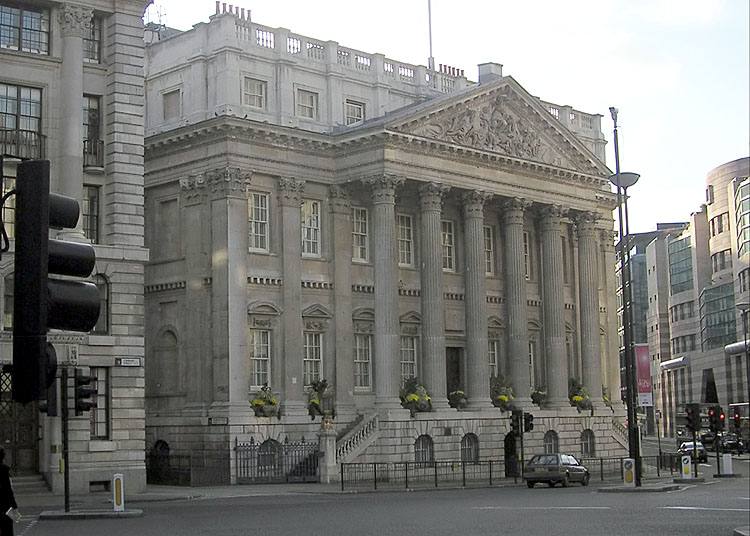
On Friday 27 November, the Egyptian Hall at Mansion House, usually home to state banquets and the Chancellor's annual speech to the City, will be handed over to teenagers from London state schools.
About 100 students will have a single day to design, build and pitch working AI apps. The apps are meant to help people in their neighbourhoods find opportunities, share and reuse technology, and tackle local problems.
The WCIT Hackathon, now in its fifth year, takes place ten days after Alan Milburn published his review of youth unemployment, From a Welfare State to a Working State. The review sets out reforms aimed at getting 440,000 young people into work by 2036. It also aims to cut the share of 16- to 24-year-olds not in education, employment or training (NEET) from 13%, close to one million people, to 5%. New figures from the Office for National Statistics are due on Thursday, the day before the hackathon.
A first for the Lord Mayor
This is the first year the event has been hosted by the Lord Mayor of the City of London. Alderman Bronek Masojada took office on 13 November and will present the prizes in one of his first public engagements. On the same day, he will bring City business leaders together and ask how they can create new routes into their sectors for young people, from work experience and internships to permanent jobs.
"Young people have enormous talent and ambition, but too many face barriers to accessing the opportunities they need. We need to do more to connect that talent with opportunity, building ladders that help young people overcome those barriers and take their first steps into meaningful careers. The WCIT Hackathon is a great example of this in action, and on the same day, we'll be bringing together City business leaders to explore how we can open more doors and create clearer pathways into work," said the Lord Mayor.
From crash course to working prototype
The competition is run by the Worshipful Company of Information Technologists (WCIT), the City livery company for the tech sector, together with the youth charity Urban Synergy. It is sponsored by the business technology recycler Relove Technology.
Many of the students have never studied computing. Teams of ten will get a crash course in Microsoft Copilot Studio and then work with two industry mentors each, from Microsoft UK, Vodafone, Kantar and Kyndryl UK. By mid-afternoon each team will pitch a prototype to a panel of judges.
The brief is deliberately broad. Students must build something that helps their community access opportunities, share and reuse resources, or solve an everyday problem. Their ideas could tackle digital or financial exclusion, help people repair and reuse things, or bring neighbours together around a local issue.
For many young people the barrier begins with the technology itself. The government estimates that 1.6 million people in the UK live offline, without the devices, connection or skills to get online.
"Many young people can see the shiny buildings of financial hubs from their windows but don't feel like they belong there. I believe that's unacceptable," said Leila Thomas, chief executive and founder of Urban Synergy. "Tackling the NEET crisis requires business, government, and charities working together — and this hackathon shows that collaboration in action."
Giving technology a second life
A growing number of businesses are giving their used laptops, tablets and phones a second life. The devices are securely wiped and refurbished, then passed on to schools, charities and families who need them.
"We're focused on closing the digital divide by helping businesses recycle their hardware safely, so that more devices end up in the hands of young people," said Paul Crossman, chief executive of Relove Technology, a B Corp and long-standing sponsor of the hackathon. "I can't wait to see what the students come up with – and perhaps help them turn their ideas into reality."
The winning team will receive £500, with £300 for second place and £200 for third, to spend on their school, their studies or a charity of their choice. Relove Technology will also award tech packs to the winning students.
'It made those possibilities feel more real'
Students who took part last year say the day changed how they saw their futures. "Opportunities can be hard for young people to understand when you have not had a chance to meet people working in those fields," said Simon, 17, from Hammersmith Academy. "Meeting professionals and taking part in a practical challenge made those possibilities feel more real to me."
His classmate Abdulrahman, 17, said: "Not everyone has family connections or someone who can explain the different routes into these careers."
Paul Finch, Master of the WCIT, said the hackathon sets out "to test the critical thinking skills of young Londoners and demystify the technology used in the workplace".
The schools taking part this year are Ada, the National College for Digital Skills; Christ the King Aquinas, Emmanuel and St Mary's sixth forms; Hammersmith Academy; Harris Academy Crystal Palace, South Norwood and Tottenham; Leigh Academy Halley; and Lilian Baylis. Undergraduate volunteers from City St George's, University of London, will also help on the day.
Contributor at The London News