The beauty industry runs on the self-employed. I built Bodybox for them
Bodybox London founder Klavdiia Zorina on why she built a flexible, lease-free workplace for the self-employed practitioners who power the beauty industry.
13 November 2026 · 4 min read
For years I rented treatment rooms so I could do my own work. I started as a make-up artist in special effects and theatre, then trained as a body-contouring therapist, and like thousands of people in beauty and aesthetics, I worked for myself. What I kept running into was not a shortage of clients or skill. It was the simple question of where to work.
If you want a professional room in London, the usual answer is a lease. A lease asks you to prove, in advance, that your business will succeed: a deposit, a guarantee, a long commitment, a fit-out, all payable before a single client walks through the door. It filters for who can guarantee, not for who can treat. I met that wall myself, and I watched talented practitioners meet it too. Some signed for space they could not really afford. Others never started at all.
I had been circling the answer for a long time without naming it. Over the years I rented rooms from salons and clinics, and nothing ever felt quite my own. Later I ran my own ventures in beauty and hospitality, combining a coffee shop concept with a beauty bar, with other practitioners working from the space too. Looking back, that was the first real test of the idea: somewhere people could turn up, treat their clients and leave, without taking on everything that comes with a lease. It worked, and it told me there were far more people who needed this than anyone was building for.
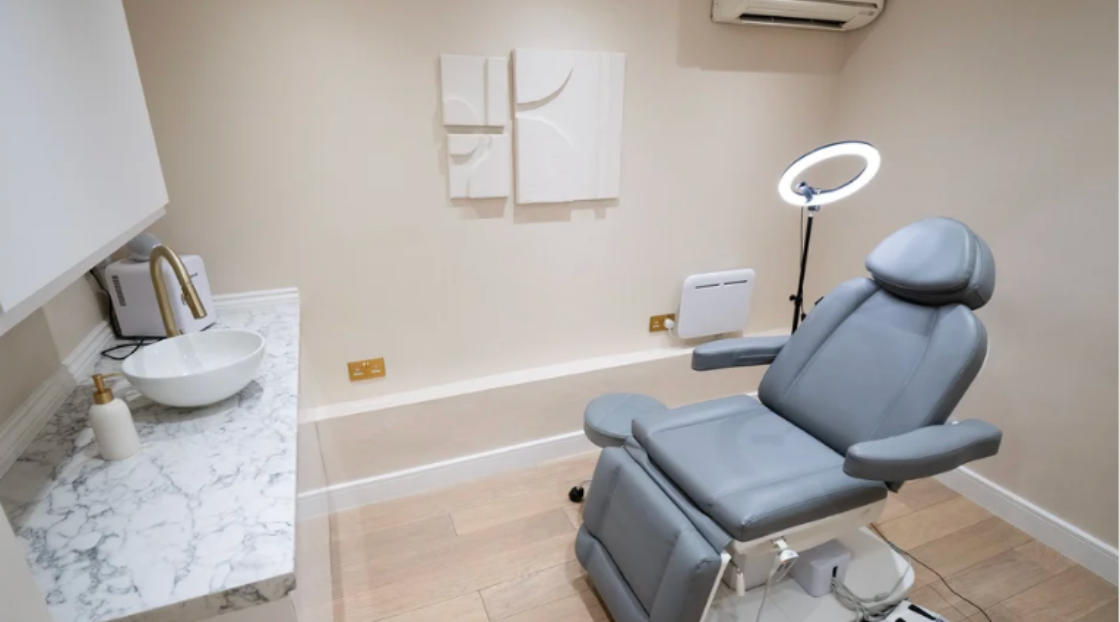
So I built the dedicated version. Bodybox London rents treatment rooms by the hour and by the day to independent practitioners across Central London. You book the space you need through an app, work your day, and leave. No lease, no long contract, no overheads to carry before you are ready. We now run eleven rooms across two sites, in Fitzrovia and King's Cross, and we are looking for a third. The members range from aesthetic doctors and prescribing nurses to brow, lash and skin specialists, massage and body therapists.
The people who work from Bodybox tell you everything about how this industry really runs. One of our practitioners left salon management at 25 to go out on her own. She wrote an income target on a piece of paper that felt out of reach at the time, and she hit it, building her name by the hour instead of signing for a salon. Another has worked as cabin crew for 21 years and has built an aesthetics business and a training academy in the North East; she travels down to London to see her clients, because a London lease would make no sense for someone who lives in the north. A practising GP runs an aesthetics practice and trains other clinicians around her full-time work in general practice. None of them fit the old model, and every one of them is building something real.
What strikes me, running the business, is how many of them are doing it alongside something else. People test an idea in the evenings and at weekends, prove it works, and only then decide whether to go all in. You cannot do that if the first step is a year's rent. Flexible space is what makes the second career, the side business and the careful first move possible.
This is not a niche. The beauty and aesthetics workforce is growing fast, and it is increasingly self-employed, overwhelmingly women working for themselves. Flexible workspace, as most people picture it, was built for someone with a laptop. The people I work with need a professional room, somewhere clients trust, and the freedom to grow before they commit. That infrastructure is only now being built, and it changes who gets to go independent at all.
I think of it as removing the commitment, not the standard. A practitioner should be able to work from a room that does her skill justice without betting a year of income she has not yet earned. When the risk at the start is smaller, more people take the step, and more of them are the people this industry has always leaned on but rarely built for.
I built Bodybox because I believe the barrier to working for yourself should not be a year's rent paid up front. Lower that first rung, and far more people, most of them women, can make independent work pay. It is the business I wanted when I was renting rooms myself. Now it is the one I run.
Klavdiia Zorina is the founder of Bodybox London, which rents treatment rooms by the hour and by the day to independent practitioners in Central London.
Contributor at The London News