Selling Christmas hampers online: the basket carries VAT
A food hamper mixes zero-rated food with standard-rated chocolate, wine and the basket itself. HMRC expects the price split between them, on a fair method.

30 October 2026 · 4 min read
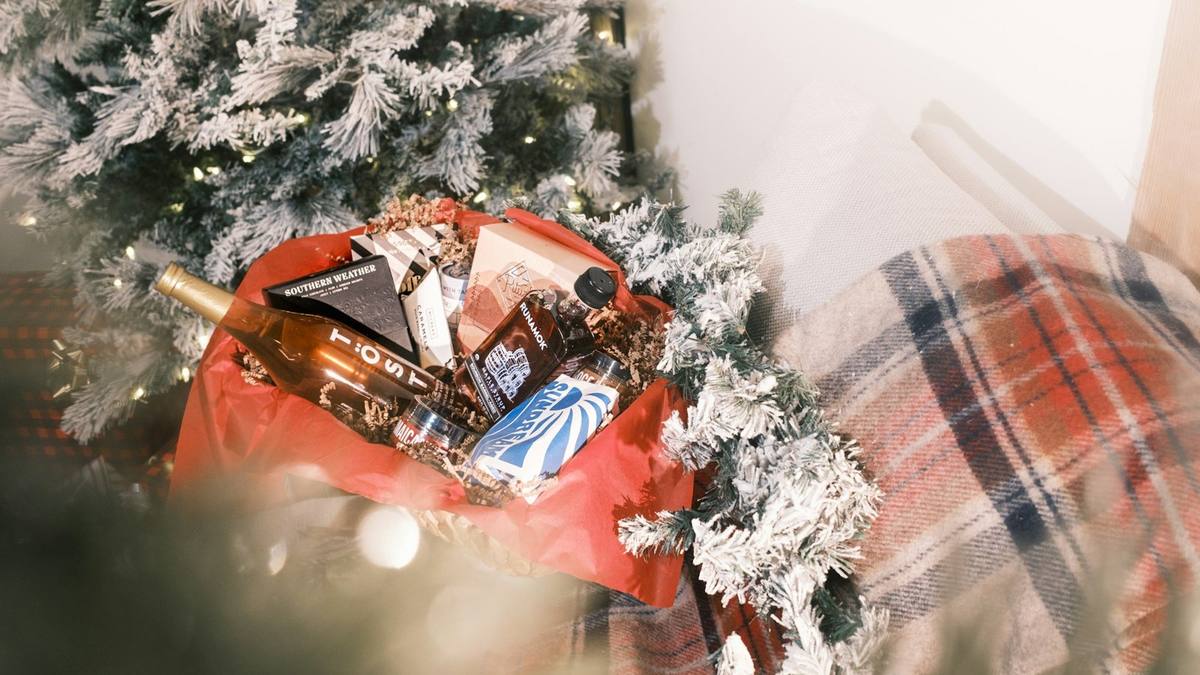
A VAT-registered seller who prices a Christmas hamper of food, chocolates and wine as one product, at one rate, gets the VAT wrong whichever rate they pick. HMRC's notice on food products and VAT, last updated on 8 June 2026, names food hampers as a mixed supply. Each thing in the basket keeps its own VAT rate, including the basket, and the single price you charge has to be split between them.
For a shop that sells a few hundred hampers between now and Christmas, the gap is worth an afternoon with a spreadsheet.
What sits at which rate
Most food is zero-rated, and the notice is specific about the exceptions that tend to end up in hampers. Cakes are zero-rated, Christmas cake included. Biscuits are zero-rated unless they are wholly or partly covered in chocolate, so plain shortbread is zero-rated and chocolate-dipped shortbread is not. Chocolates and sweets are standard-rated confectionery. Wine and every other alcoholic drink is standard-rated.
Then the container. Packaging that only holds and protects the food takes the rate of the food, and the notice says Christmas overwraps and decorated tins are not treated as separate unless they fall into one of its listed categories. One of those categories is "hampers and picnic baskets (other than simple cardboard cartons)". A wicker basket is a supply in its own right, at 20 per cent. A plain cardboard box is not.
The small-item exception
HMRC lets a minor standard-rated item ride along with a main zero-rated one, so that the whole thing is zero-rated, if three conditions are all met. The item must not be charged at a separate price. It must cost you no more than 20 per cent of the total cost of the pack. And it must cost you no more than £1, before VAT.
A chocolate coin that costs you 60p, tucked into a box of iced biscuits that costs you £3, passes all three: 60p is under £1, and it is a sixth of the £3.60 total cost. A £5 box of chocolates in a £40 hamper fails the £1 test straight away. Most hampers are built from several full-priced items, so most will not qualify.
Splitting the price
HMRC's main VAT guide sets out two methods, one based on normal selling prices and one based on cost. You do not have to use either, but whatever you use "must still give a fair result". If you sell each item separately as well, the selling-price method may be simpler, since it splits the price in proportion to what each part normally sells for. For hampers built from items you never sell on their own, the cost method is usually the one you can evidence.
Illustration, not a real client: an online shop sells a hamper for £60 including VAT. Its zero-rated contents, a Christmas cake, plain shortbread and iced biscuits, cost £21. Its standard-rated items, a box of chocolates, a bottle of wine and the wicker basket, cost £19 before VAT.
Following HMRC's worked method, add VAT to the standard-rated cost: £19 becomes £22.80. Total cost on that basis is £43.80, so the standard-rated share is £22.80 divided by £43.80, about 52 per cent. That share of £60 is £31.23, which includes £5.21 of VAT. The other £28.77 is zero-rated.
Treat the whole £60 as standard-rated and the VAT is £10, so the shop hands HMRC £4.79 a hamper it did not owe. On 300 hampers, that is £1,437. Treat the hamper as food and charge nothing, and it is £5.21 short on each, £1,563 on the same 300, which HMRC can come back for.
The container changes the answer too. Swap the wicker basket for a plain cardboard carton and the carton stops being a supply of its own, so the basket's £5 leaves the standard-rated side of the sum. On the same method, and leaving the carton's own small cost aside, the VAT in a £60 hamper falls to £4.44, 77p less, or £231 across 300.
Before the first order ships
Write down the cost of every item in each hamper and its rate, and keep the calculation with your VAT records. Change the contents and the split changes with them. If your checkout or marketplace listing applies one tax rate per product, the hamper needs its own VAT figure set from that calculation rather than a default. Our guide to taking the VAT out of a VAT-inclusive price explains the last step, dividing £31.23 by six to find the £5.21.
If you are not VAT registered, none of this changes your price. It matters from the day you register, so build the costing sheet now, while there are only a few hamper lines to cost.
About the author
Harvey Dhillon is Founder and CEO of Zmartly, a UK accountancy firm for ecommerce sellers. He grew up in West London and began his career in investment banking finance at Barclays, before going full-time on Zmartly in 2020. He is a Chartered Management Accountant (ACMA, CGMA).
Featured photo by LOGAN WEAVER on Unsplash.
Contributor at The London News