EU customs duty: €3 per item on parcels from UK sellers
Since 1 July, low-value parcels sent to EU shoppers pay €3 of customs duty per item. What UK online sellers should check before the Christmas orders start.

18 October 2026 · 4 min read
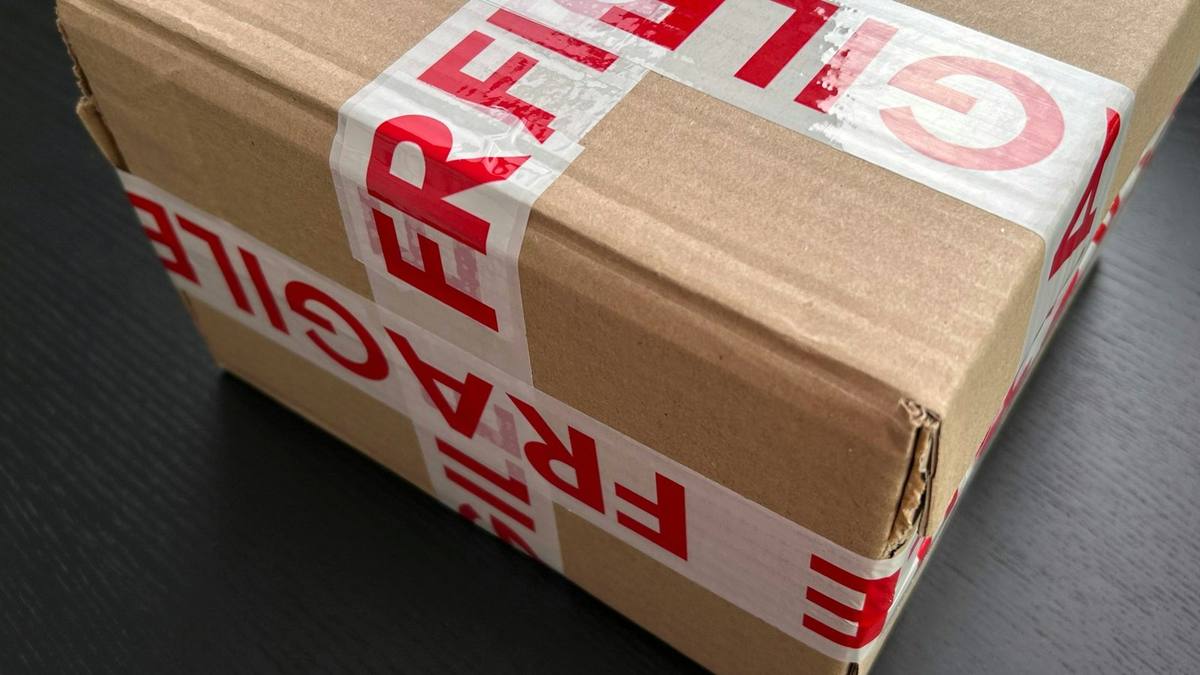
Parcels worth €150 or less that UK online shops send to shoppers in the EU have paid customs duty of €3 per item since 1 July 2026. Before then, most paid none. With Christmas orders about to start, the charge belongs in your prices and your delivery terms, not on a customer's doorstep.
What changed in July
The EU used to waive customs duty on consignments worth €150 or less. Council Regulation (EU) 2026/382 replaced the waiver with a temporary flat duty of €3 per item, applying from 1 July 2026 to 1 July 2028, according to the European Commission. It covers sales of imported goods to consumers in consignments worth €150 or less, however the EU VAT on them is handled. Goods that qualify as UK origin under the UK-EU trade agreement can still claim its zero rate, but only on a full H1 declaration without IOSS.
"Per item" does not mean per object. The Commission defines an item as goods in a consignment that share the same tariff classification, description and, where it applies, origin. In practice, it says, the duty is charged per line of the customs declaration. Three identical mugs on one line pay €3. A mug, a tea towel and a candle, each with a different tariff code, can pay €9.
The Commission now expects a €2 handling fee per item from 1 November 2026, on online sales of any value. Ask your carrier how it will be charged.
The UK side has not changed
A sale from Great Britain to a customer in the EU is an export. For a VAT-registered seller it is zero-rated, as long as the goods leave the UK and you hold valid evidence of export. HMRC's export rules give three months for most direct exports, including goods sent by post or courier. Without the evidence, it cannot be zero-rated, and UK VAT is due at the appropriate rate.
EU VAT is a separate charge again, whether it is collected at checkout or on delivery. Our guide to when an overseas sale carries UK VAT and when it does not sets out the UK half. The €3 duty is separate from both.
What it looks like on one order
Illustration, not a real client. Ines sells handmade ceramics and linen from a studio in Stoke Newington through her own website. A customer in Lyon orders a mug and a linen tea towel, €70 in all, sent by post.
Her pieces are made in London, so they may qualify as UK origin, but the zero rate needs a full H1 declaration. Without one, the mug and the tea towel have different tariff codes, so the parcel carries two lines and €6 of duty, about 8.6 per cent of the order. From 1 November the expected handling fee adds €4 more. Had the customer bought two identical mugs instead, it would have been one line: €3 of duty and €2 of fee.
Who pays depends on how the parcel is cleared: Ines up front, or her customer before delivery. A customer who meets a charge they were not told about is a customer who may not order again.
On the UK side, if Ines is VAT registered, the €70 sale is zero-rated as long as she keeps her proof of posting to the Lyon address.
Before the Christmas orders
Check the tariff code of each product you send to the EU, and ask your carrier how it groups them on the declaration.
Decide who pays the duty. Either build it into the price and send the parcel duty paid, or tell customers clearly at checkout that a charge may be due on delivery.
Look again at bundles and gift sets that mix product types. They now carry more duty than a parcel of one product.
Keep the proof of posting or the courier record for every EU parcel, so the UK zero rate stands.
Ask your carrier how the €2 handling fee will be charged from 1 November, and whether a full H1 declaration is worth it for larger orders of goods made in the UK.
Three euros is small on one mug. On a gift box whose five products sit on five declaration lines it is €15, plus an expected €10 of handling fees from November, which is worth knowing before this year's shipping rates are set.
About the author
Harvey Dhillon is the founder and CEO of Zmartly, a UK accountancy firm for ecommerce sellers. He grew up in West London and began his career in investment banking finance at Barclays, before going full-time on Zmartly in 2020. He is a Chartered Management Accountant (ACMA, CGMA).
Featured photo by Ari Sha on Unsplash.
Contributor at The London News