Couples running an Etsy shop: decide whose business it is
One owner or a partnership changes the tax, the returns and what Etsy reports to HMRC. The £1,000 trading allowance does not cover partnership profits.

10 November 2026 · 3 min read
If two of you run an Etsy shop together, decide early whether it is one person's business or a partnership. The tax, the paperwork and even the details Etsy sends HMRC follow that choice. And one rule is easy to miss: the £1,000 trading allowance does not apply to partnership profits at all.
Two ways to set it up
As a sole trader, one of you owns the business. The other may help, but the profit and the tax belong to the owner, and the shop sits in the owner's name.
In a business partnership, gov.uk puts it plainly: you and your partner personally share responsibility for the business, including its losses and the bills for stock and equipment. Partners share the profits, and each pays tax on their own share. That shared responsibility is what makes it a partnership. A name on a form does not.
What a partnership changes
Three returns, not one. One partner, the nominated partner, registers the partnership and files a partnership return each year. Each partner also registers and files their own Self Assessment return.
No trading allowance. HMRC's guidance says the allowance does not apply to trading income from a partnership. You also lose it for any other trading in the same year if that income includes a payment from a partnership in which you, or someone connected to you, is a partner. The allowance is set to rise to £3,000 from 6 April 2027, subject to the Finance Bill.
A shared penalty. If the partnership return is late, every partner is charged a penalty, starting at £100 each.
What Etsy asks for. If you sell as a UK partnership, platforms ask for the partnership's Unique Taxpayer Reference rather than one person's National Insurance number, so the account has to be set up that way.
The registration deadline is the same as for a sole trader: by 5 October after the end of the first tax year you trade.
The same profit, taxed two ways
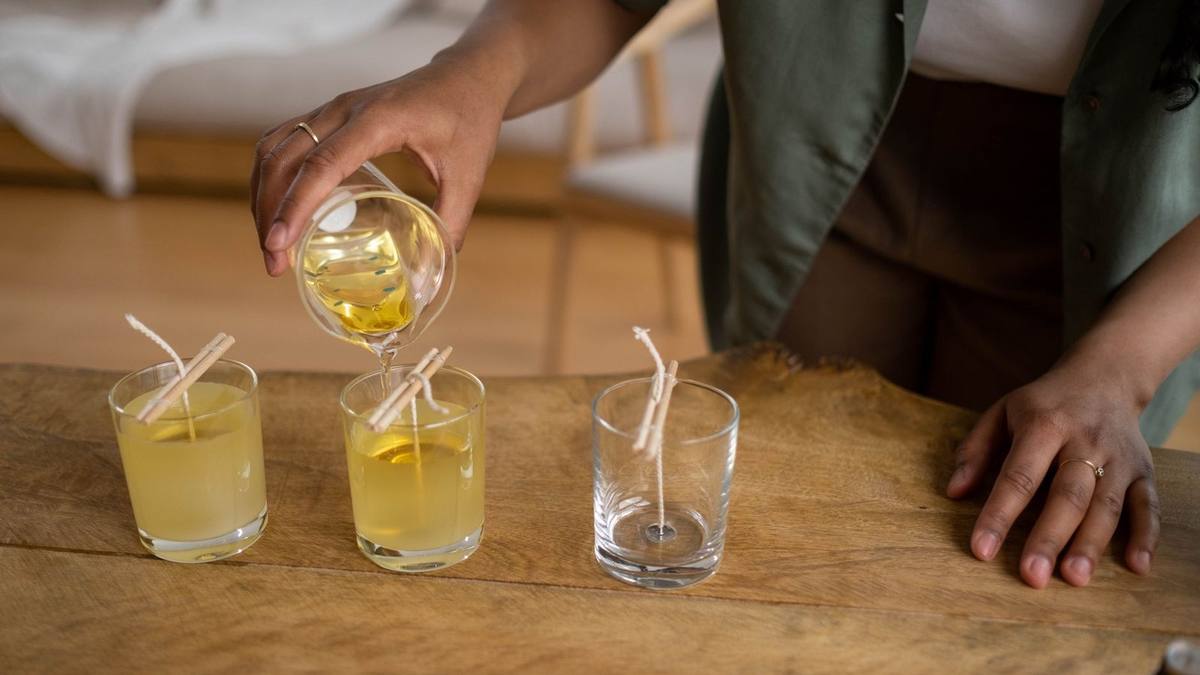
Illustration, not a real couple. Priya and Ravi make soy candles in Ealing and sell them on Etsy. Both of them work in the business. In 2026 to 2027 it makes £36,000 of profit, and neither has any other income.
As Priya's sole trade, all £36,000 is hers. Income Tax is £4,686 and Class 4 National Insurance £1,405.80: £6,091.80.
As an equal partnership, each partner has £18,000. Each pays £1,086 of Income Tax and £325.80 of National Insurance, £1,411.80 each, or £2,823.60 together.
The difference is £3,268.20 a year, because the second partner's £12,570 Personal Allowance and National Insurance threshold are used as well. It only holds if the partnership is real: both of them in the business, sharing its risks and its debts, with the split reflecting what each puts in. A partnership on paper, while one person does all the work and carries all the risk, is not the shared responsibility gov.uk describes.
Before you choose
Agree who does what, who owns the stock and equipment, and how profits are split, and write it down.
Check whose name and details the Etsy account holds, and update them if the business is a partnership.
Decide who will be the nominated partner and diary the partnership return as well as your own.
If the shop is small enough that the trading allowance would cover it, weigh that up. A partnership gives the allowance away.
Our guide to the partnership tax return walks through the SA800 and how each partner's share reaches their own return, and our page for online sellers covers the rest of the Etsy books. Have the conversation about ownership now, before the year end, rather than after the first return is filed in one name.
About the author
Harvey Dhillon is Founder and CEO of Zmartly, an accountancy firm for ecommerce sellers. He grew up in West London and began his career in finance at Barclays, in investment banking and wealth management, before going full-time on Zmartly in 2020.
Featured photo by Ron Lach on Pexels.
Contributor at The London News