Average Personal Guarantee-Backed Business Loan Exceeds Average U.K. House Price
After 18 months of pain, October Budget must deliver certainty.
7 October 2026 · 2 min read

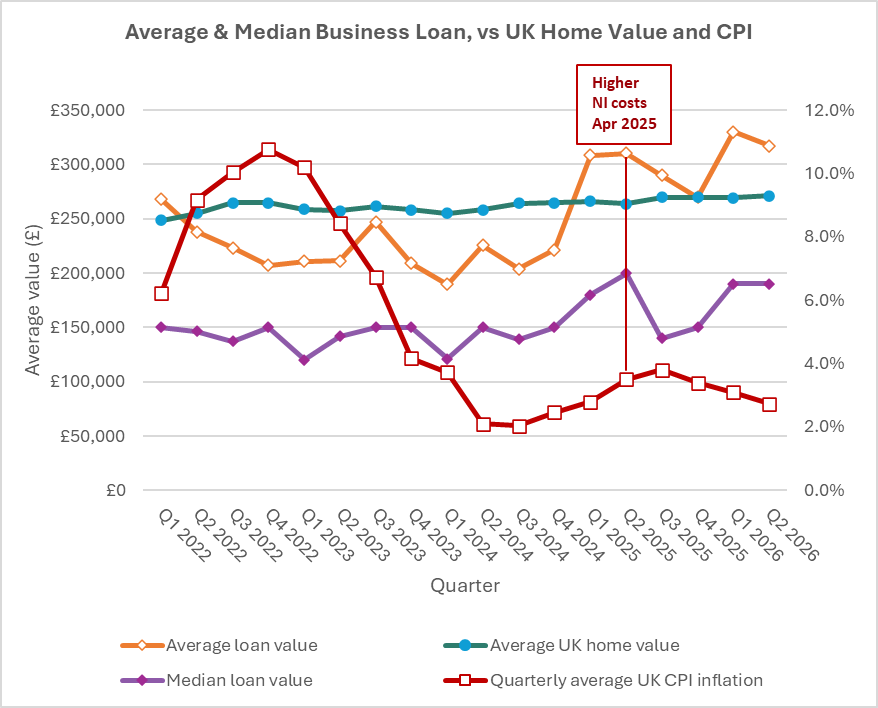
New analysis of personal guarantee backed small business loans shows how the rising cost of doing business over the past 18 months – notably the increase in National Insurance contributions – has led to an increase in the value of loans taken on by small business owners, outpacing the value of the family home in many cases. The family home is an asset used as security in a personal guarantee, putting it at risk if the business fails. The analysis demonstrates in stark terms the increased level of risk small business owners have faced.
Data from Purbeck Insurance Services, the UK’s only provider of personal guarantee insurance to small and medium sized business owners and directors, shows the average personal guarantee backed loan is £317,000 compared with the average house price of £271,204 (Q2 2026) for the UK according to Land Registry figures. The median loan value of £190,000 is still close to the average house price in the North West (£218,222), now also home to the Prime Minister's new Number 10 North. Purbeck has seen a broadly consistent rise in the average and median value of personal guarantee backed loan values since quarter 1 2025, against a backdrop of low inflation rates and a housing market in the doldrums.
Calls for Fiscal Certainty Ahead of the Budget
Todd Davison, MD of Purbeck Insurance Services, says:
“The October Budget must draw a line under the relentless rise in the cost of doing business. With fewer new firms being created and external finance increasingly used for working capital rather than investment, more directors are borrowing simply to keep their businesses moving. When that borrowing is backed by a personal guarantee, Government-imposed cost increases do not stop at the company’s balance sheet—they can put an owner’s home and savings at risk. The Chancellor must use the Budget to provide firm, credible certainty on tax and employment costs and avoid adding further burdens. Small-business owners cannot plan, invest or grow while they are waiting for the next fiscal hit.”
Contributor at The London News