Would Londoners swap their BMW for a BYD? One in ten leased cars now comes from a Chinese brand
2 October 2026 · 4 min read
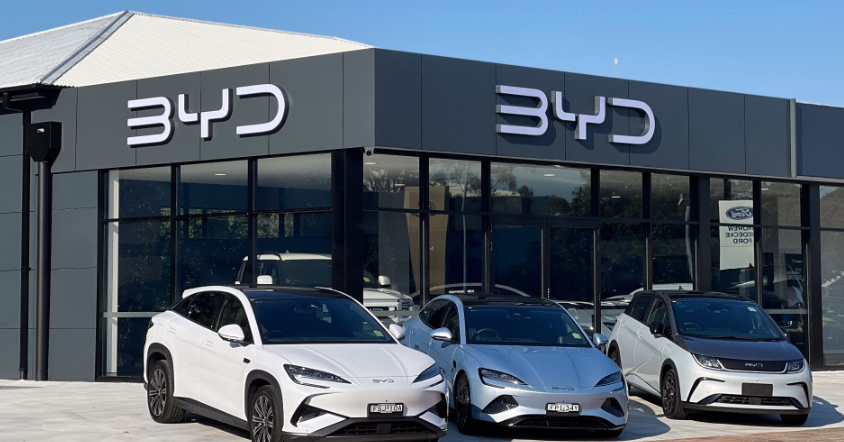
For years, London's roads have been dominated by familiar badges — BMW, Audi, Mercedes-Benz, Range Rover and, more recently, Tesla.
But the next car pulling up beside you at the traffic lights could have a name you barely knew existed a few years ago.
Chinese car manufacturers are rapidly gaining ground in Britain, with new figures revealing they now account for more than one in ten leased cars.
And for London drivers in particular, where emissions, electric vehicles and the cost of running a car in the capital are already major considerations, the arrival of a new generation of technology-heavy EVs and SUVs could make the market increasingly interesting.
According to new data from Nationwide Vehicle Contracts, Chinese brands accounted for 11% of vehicle leasing orders so far in 2026.
Just two years ago, they represented only 0.5%.
Enquiries have risen just as dramatically, jumping from 1% of all enquiries in 2024 to 13% this year.
It means brands including BYD, Omoda, XPeng, Chery, Jaecoo and Leapmotor are increasingly competing for the attention of British motorists alongside manufacturers that have been familiar sights on London's roads for decades.
London's changing car market
London is an interesting battleground for these new manufacturers.
Drivers in the capital already have to think differently about choosing a car.
The expansion of the Ultra Low Emission Zone across all London boroughs has put vehicle emissions firmly on motorists' agendas, while electric cars have become an increasingly familiar sight on the capital's streets.
For drivers considering an EV, the decision can be very different from simply choosing between familiar petrol or diesel models.
Battery range, charging technology, connectivity, infotainment systems and the amount of equipment included as standard can all influence the decision.
And that's where many of the Chinese newcomers are attempting to compete.
Rather than positioning themselves solely as cheaper alternatives, manufacturers are launching cars designed to challenge established European, Japanese, Korean and American rivals on technology and specification.
Chinese car brands are booming in Britain
Several manufacturers have recorded particularly dramatic growth over the past year.
Chery has seen enquiries rise 245% compared with 2025, while orders have soared 309%.
BYD enquiries have increased by 42%, with orders almost doubling at 95%.
Omoda enquiries are up 37% and orders have risen 53%, while Leapmotor has experienced increases of 18% in enquiries and 19% in orders.
For brands that many London drivers may not even have recognised a few years ago, that's significant growth.
And as more of these vehicles appear on Britain's roads, familiarity could become one of their biggest advantages.
After all, motorists are far more likely to consider an unfamiliar badge once they've started seeing it on the school run, parked outside the supermarket or sitting next to them in London traffic.
Would you swap your BMW for a BYD?
Perhaps the most interesting development is who these manufacturers are attempting to compete with.
They're no longer simply targeting the budget end of the market.
The BYD Seal, for example, is often compared with the Tesla Model 3 and BMW i4.
XPeng's G6 electric SUV is competing in similar territory to the Tesla Model Y and Audi Q4 e-tron.
Meanwhile, newer SUV brands such as Jaecoo and Chery are entering a market populated by hugely familiar models including the Range Rover Evoque, Nissan Qashqai and Kia Sportage.
For London's more badge-conscious motorists, that creates an interesting choice.
Would you swap a BMW, Audi or Tesla for a BYD or XPeng if the newcomer offered more technology or equipment for your monthly budget?
Increasing numbers of British leasing customers appear willing to consider exactly that.
Is the badge on the bonnet becoming less important?
For decades, a car badge has been about far more than getting from A to B.
Particularly in a city like London, the car parked outside your home can also be a status symbol.
But electric vehicles could potentially disrupt that traditional hierarchy.
When motorists are comparing battery range, charging capability, screens, cameras, driver-assistance technology and connectivity, an unfamiliar manufacturer with an impressive specification can suddenly become a credible alternative to a brand that has spent decades building prestige.
Leasing could also make experimenting with a new manufacturer more appealing.
Choosing a relatively unknown brand may feel like a bigger gamble if you're spending tens of thousands of pounds buying a car outright and worrying about its future resale value.
A lease allows drivers to experience a newer manufacturer for a fixed period without necessarily making the same long-term commitment.
'Customers aren't simply choosing these vehicles because they're cheaper'
Keith Hawes, Director of c, said the company's figures suggest price isn't the only thing driving the shift.
He said: “What's interesting is that customers aren't simply choosing these vehicles because they're cheaper. Many offer impressive technology, strong electric vehicle credentials and high levels of standard equipment, which is clearly resonating with drivers.
“As more brands arrive in the UK and continue expanding their model ranges, we expect interest to keep growing as motorists become increasingly open to considering alternatives to the traditional premium manufacturers.”
The rise of Tesla has already demonstrated how quickly motorists can embrace a relatively new name when the technology and proposition are compelling enough.
Chinese manufacturers are now attempting their own disruption.
For Londoners, it could mean the city's roads start looking very different over the next few years.
BMW, Audi, Range Rover and Tesla aren't disappearing from the capital anytime soon.
But if the latest leasing figures are anything to go by, don't be surprised if the next unfamiliar badge you spot in London traffic becomes a very familiar one sooner than you think.
You can read more about Nationwide Vehicle Contracts' data on the rise of Chinese car brands here.
Contributor at The London News